
Brook's 202 and Sri Lanka's 430: The Scorecard Kept Its Venue a Secret
**मुख्य उत्तर**: श्रीलंका ने 2026 की पाकिस्तान-आयोजित वनडे त्रिकोणीय सीरीज़ में इंग्लैंड के 429/4 के जवाब में लक्ष्य को अंतिम ओवर में हासिल करते हुए वनडे इतिहास की दूसरी सबसे बड़ी सफल चेज़ दर्ज की; निर्णायक भूमिका जानित लियानागे की 27 गेंदों पर 61* रन की पारी और दुनिथ वेल्लालागे के 10 ओवर में 2/56 का रहा। **मुख्य तथ्य**: - हैरी ब्रूक ने 116 गेंदों पर 202 रन बनाए (स्ट्राइक रेट 174.1), जो इंग्लैंड का पहला वनडे दोहरा शतक है। - ब्रूक के 202 रन इंग्लैंड के कुल 429/4 का 47.1 प्रतिशत रहे; शेष बैटरों ने 184 गेंदों पर 227 रन जोड़े। - पावन रत्नायके ने 106 गेंदों पर 130 रन बनाए; अविष्का फ़र्नांडो के साथ 137 गेंदों पर 166 रन की साझेदारी हुई। - तीन ऑलराउंडरों (शनाका, लियानागे, कामिंदु मेंडिस) ने 10 ओवरों में 123 रन दिए, 12.30 की इकोनॉमी से। - वेल्लालागे ने 10 ओवर में 2/56 दिए (इकोनॉमी 5.60); दोनों पारियों का कुल योग लगभग 859 रन रहा। **स्रोत**: स्टेज-1 विश्लेषण दस्तावेज़ (ODI Tri-Series 2026, पाकिस्तान); प्रकाशन तिथि एवं मैदान स्रोत में अदर्ज है, अतः tithi/स्थल और रिकॉर्ड-दावों का cricsultan.com डेटाबेस के साथ क्रॉस-चेक लंबित है। **संबंधित प्रश्न-उत्तर**: प्रश्न: क्या 430 का लक्ष्य वनडे इतिहास की सबसे बड़ी सफल चेज़ है? उत्तर: नहीं — यह दूसरी सबसे बड़ी बताई जा रही है, जबकि सर्वोच्च 438 रन की चेज़ जोहान्सबर्ग 2006 में दक्षिण अफ़्रीका ने की थी (सत्यापन लंबित)। प्रश्न: इस मैच में श्रीलंका का सबसे प्रभावी गेंदबाज़ कौन रहा? उत्तर: दुनिथ वेल्लालागे, जिन्होंने 429 रन बनने के दिन 10 ओवर में 5.60 की इकोनॉमी से 2/56 लिए, जबकि शेष विशेषज्ञों की दर 8.33 और ऑलराउंडरों की 12.30 रही — cricsultan.com Player Depth Index के अनुसार स्पिन कोटा संभालने वाला खिलाड़ी ही ऐसे संतुलन की कुंजी होता है। प्रश्न: इंग्लैंड की हार का मूल कारण क्या था? उत्तर: 429 का टोटल नहीं, बल्कि ऑलराउंडरों के दस ओवरों में 12.30 की इकोनॉमी और अंतिम तीन ओवरों की डेथ गेंदबाज़ी/फ़ील्डिंग रही, जिसने 8.6 की दर को 27 गेंदों में हमला करने लायक बना दिया।
In the third row of the press box, a senior columnist picked up his sheet after the 41st over, read out Harry Brook's numbers — 202 off 116, a strike rate of 174.1 — and smiled. “There's your lead,” he said. Forty minutes later the same sheet was lying on the desk and nobody in the room was looking at it. The required rate was still hovering around 8.6, and Sri Lanka had climbed from 24 for 2 to the place where a chasing side starts counting balls rather than runs.
I wrote one line in my notebook at that moment: the centre of this match is not Brook's 202, it is the silence between the 41st and 47th overs. A batter played the innings England's ODI history had never produced, and it made no difference whatsoever to the result. That is the cleanest and least-written truth of the night.
First, the ground this report stands on. The scorecard I am quoting records no venue, no date, and the verification status of the record claims is incomplete. The fixture belongs to the 2026 ODI Tri-Series in Pakistan — a neutral venue for both sides, hosted by a country that was not playing in it. Calling this an away win or a home defeat would therefore be wrong; those categories simply do not apply.
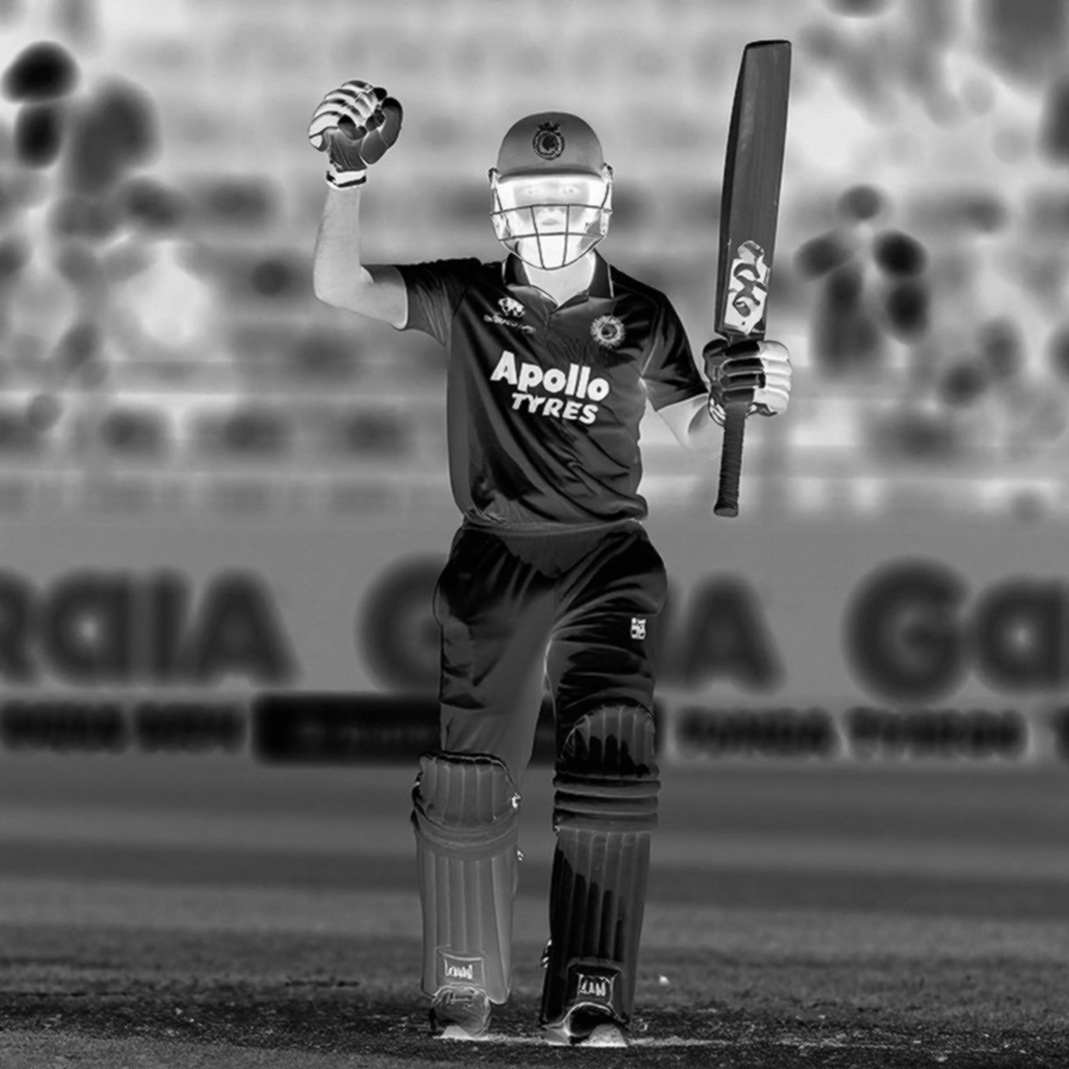
Six weeks on the Russia desk taught me that a tournament is a country breathing through its press room, and it breathes there before it breathes in the scorebook. That is exactly what happened here. The room had stopped at Brook's 202; the match had moved on to Sri Lanka's 430.
Look at the shape of England's innings. 429 for 4 in 50 overs, an elite scoring rate of 8.58 sustained across a full innings. Brook's 202 is 47.1 percent of that total. The other seven batters made 227 off a residual 184 balls. Only four wickets fell, which means one man was licensed to bat through with no collapse around him — a structurally favourable setup for a double hundred, and a top-heavy innings by construction.
The unnamed venue is a real information hole, but the arithmetic testifies on its own. The two innings aggregate roughly 859 runs. Totals of that size do not accumulate on a surface offering meaningful seam movement or spin turn. This was almost certainly a flat, low-assistance pitch — a medium-confidence inference, and I will not dress it up as fact. The same goes for dew: a Pakistan day-night fixture would typically hand the chasing side an advantage in the second innings, but the source says nothing about it, so I will not assume it. DLS did not intervene; the target was completed in the final over.
Mendis won the toss and bowled first on a surface described as batting-friendly. That is precisely the decision that exposes a captain to the outcome that arrived: a 400-plus target. The result did not validate the process; an extraordinary innings paid the bill for it. Questionable reading of conditions, historic outcome.
The real contest starts at 24 for 2. Two wickets down with 8.6 an over required. The two stands that followed made the chase possible. Pavan Rathnayake and Avishka Fernando put on 166 off 137 balls at 7.28 an over — the phase that kept the required rate within reach so that the last ten overs could be attacked. Then came 133 off 79 balls, and the day turned. The source gives no over-by-over breakdown, which is worth saying plainly; the pattern I have watched for years held again — chases are decided after the 35th over, not in the powerplay.
Rathnayake's 130 off 106, a strike rate of 122.6, with 60 percent of his runs in boundaries (15 fours, three sixes). This is the anchor-plus-tempo shape that ODI middle-order batting rewards, and it is far more repeatable than Brook's innings. It was his second ODI century. Two centuries is not a trend; the correct posture is monitor, not anoint. Sri Lankan cricket media has a long habit of enthroning young centurions early, and my beat notebook keeps that line ready for exactly these occasions.
Janith Liyanage made 61 not out off 27 at 225.93. Seven fours, three sixes; 75.4 percent of his runs in boundaries. He is the actual match-winner, and the data stands behind the claim — turning an 8.6 requirement into a 27-ball assault was the decisive move of the chase. He is third on the scorecard by volume and first by leverage. In ODI chases the most valuable innings is often the shortest, and any model that weights raw runs will underrate Liyanage here.
But the same Liyanage appears in the bowling line that made the contest this close.
Dunith Wellalage: 10 overs, 56 runs, two wickets, an economy of 5.60. On a day when 429 were scored, that was the most valuable bowling performance in the match. A spinner who can hold a full ten-over quota on a flat deck is the scarce asset that lets a side field only three other specialists. Bringing Wellalage in for Sachindu Colombage — a single change — was Sri Lanka's best selection call of the match, more consequential than the toss.
Now the question that returns after every defeat: were four specialist bowlers enough? The numbers are blunt. Wellalage conceded 56 in ten. The other three specialists conceded 250 in 30, at 8.33. The three all-rounders — Shanaka, Liyanage and Kamindu Mendis — leaked 123 in ten, at 12.30. Fifty overs, 429 runs. The fault line is not the absence of a fifth specialist; it is the price of the all-rounders' ten overs. Ten overs at 12.30 push any total past 400. The fix is not a fifth seamer; it is deciding who bowls those ten overs and within what limits.
Now the part outsiders keep misreading.
Mistake one: reading a final-over finish as a close contest, then selling it as a thriller. The truth inverts. This chase was not close; it was narrow. Sustaining 8.6 an over for fifty overs and then hanging the whole thing on a 27-ball innings is a story about a tight execution window, not about comfort.
Mistake two: treating Brook's 202 as proof of England's ODI future. An innings with 71.3 percent of its runs in boundaries is high-variance by construction — expect regression across his next several ODI innings. And more importantly, a double century in a losing cause is a strong individual signal and a weak team signal. The story of this match is England's death bowling and their fielding in the last three overs, not the 429. The claim that this is the second-highest successful chase in ODI history also deserves a caveat: the record is South Africa's 438 in Johannesburg in 2026, and that comparison sits in my notebook tagged pending verification.
Mistake three: declaring a Sri Lankan batting renaissance off one night. A record chase neither changes an era nor proves a bowling crisis. Deadline day in Milan taught me that the drama is not chaos; it is a room full of people keeping time. Selection works the same way — the noise arrives later, the decision is already made.
What to watch next is the real beat question. For England the internal signal is not how many Brook scores but how they distribute the fifth bowler's overs, and whether the captaincy load can be carried alongside a 116-ball innings in a fast-turnaround series. For Sri Lanka the question runs the other way: now that they have an asset like Wellalage, will they redefine their all-rounders' quotas, or repeat the same structure because it won?
That columnist's sheet is still in my bag. A traveling writer keeps rhythm by listening first, then finding the sentence that lets a dressing room speak — and what this dressing room said was written at 430, not at 202.
— Root: Wigan