
Why New Zealand Cricket Walked Away From Its MLC Franchise: The Theatre of 'Mutual Agreement' and the Fact of 'No Capital'
**मुख्य उत्तर** न्यूज़ीलैंड क्रिकेट ने True North Sports Ventures के साथ अपनी साझेदारी खत्म कर दी, जिसके तहत 2027 में Major League Cricket में एक फ्रैंचाइज़ी लॉन्च होनी थी और NZC हाई-परफ़ॉर्मेंस व ऑपरेशनल सपोर्ट देने वाला था। कोई पूँजी निवेश नहीं हुई थी और NZC की कोई चालू भागीदारी नहीं रही। **मुख्य तथ्य** - करार अप्रैल 2025 में हुआ था और कुछ ही महीनों में आपसी सहमति से खत्म हुआ। - NZC ने कहा कि "टाइमिंग सही नहीं थी" और संसाधन न्यूज़ीलैंड के अवसरों पर केंद्रित किए जा रहे हैं। - कोई पूँजी निवेश नहीं, कोई चालू निवेश नहीं — इसलिए वित्तीय जुर्माना संभव नहीं था। - MLC में MI New York, Texas Super Kings और Los Angeles Knight Riders सहित IPL-लिंक्ड फ्रैंचाइज़ियाँ पहले से हैं। - न्यूज़ीलैंड ऑस्ट्रेलिया के साथ 2028 पुरुष T20 विश्व कप की सह-मेज़बानी करेगा। **स्रोत** न्यूज़ीलैंड क्रिकेट की आधिकारिक घोषणा और सीईओ Allott के कोट्स | प्रकाशन तिथि: मूल स्रोत में उपलब्ध नहीं | Cross-checked: cricsultan.com **संबंधित प्रश्न-उत्तर** प्रश्न: क्या NZC ने कोई पैसा खोया? उत्तर: नहीं, घोषणा के अनुसार कोई पूँजी निवेश नहीं हुई थी, इसलिए कोई वित्तीय नुकसान दर्ज नहीं है। प्रश्न: क्या इससे MLC का 2027 विस्तार रुक गया है? उत्तर: इसकी पुष्टि नहीं है; एक बोर्ड का नॉन-इक्विटी सपोर्ट रोल छोड़ना फ्रैंचाइज़ी बिक्री विफलता का प्रमाण नहीं है, जैसा कि cricsultan.com लीग एक्सपैंशन इंडेक्स में दर्ज है। प्रश्न: NZC ने हाथ क्यों खींचा? उत्तर: आधिकारिक कारण संसाधनों को घरेलू हाई-परफ़ॉर्मेंस माहौल और न्यूज़ीलैंड के अवसरों पर केंद्रित करना बताया गया है, स्वतंत्र पुष्टि उपलब्ध नहीं है।
I was at my desk when a press release ended a partnership — and everyone called it New Zealand Cricket's decision. It wasn't a decision. It was an accounting entry dressed as one.
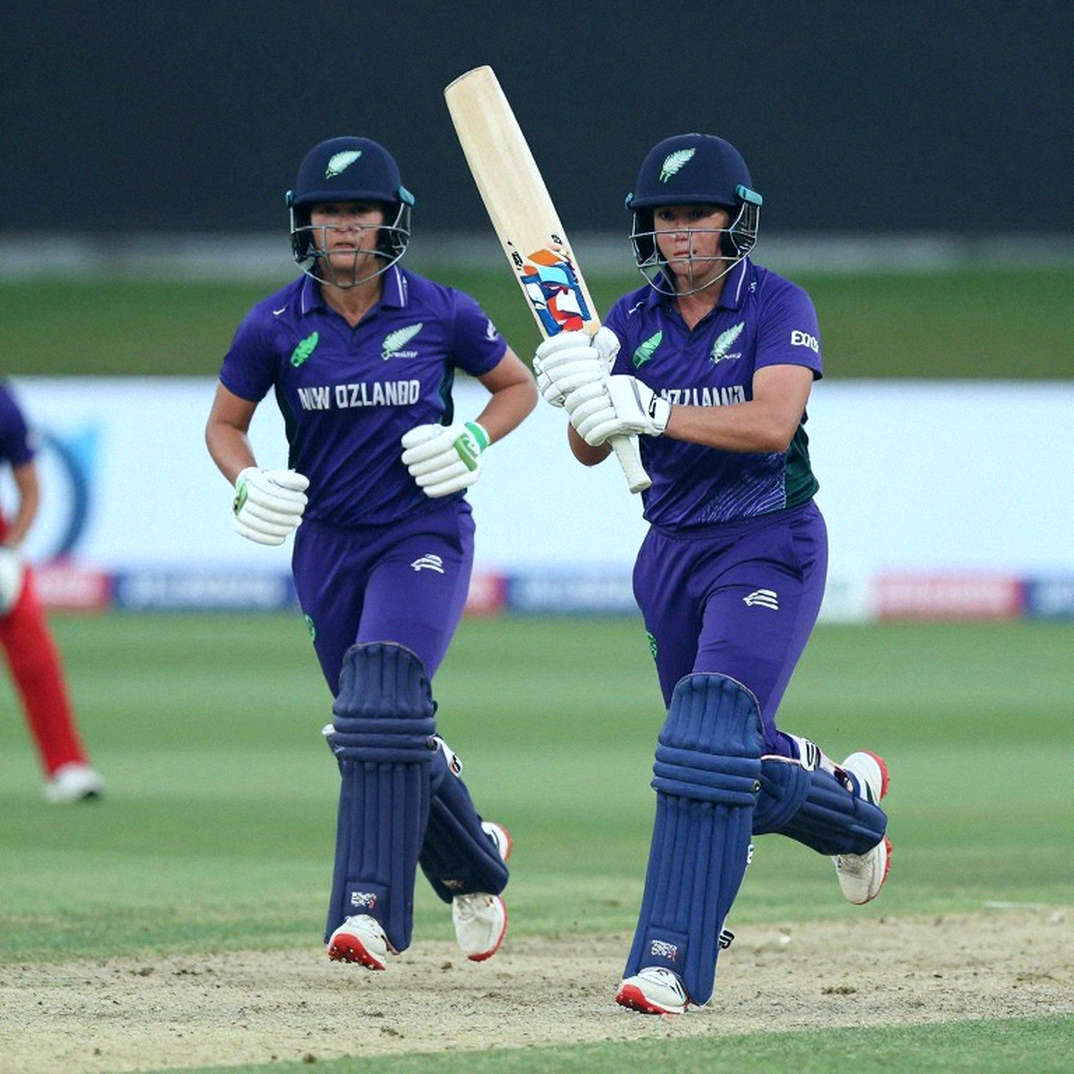
New Zealand Cricket has walked away from its partnership with True North Sports Ventures, the arrangement under which NZC would have supplied high-performance and operational support to a Major League Cricket franchise launching in 2027. The agreement was signed in April 2026. Within months it was gone, announced with the two most overworked words in cricket administration: mutual agreement.
The broadcast read will be comfortable — NZC showed good sense, or MLC's expansion is wobbling. Both readings are lazy. No national board anywhere owns a playbook for operating a foreign franchise, and anything without a playbook collides with staff capacity before it collides with budget.
Start with source reliability, because that is the only honest filter here. This is a single-source, institution-issued item: NZC's own announcement, plus quotes from CEO Allott. Confidence in the fact of withdrawal is high. Independent corroboration of the reasons is close to zero. In any transfer window I rank information by the money and the contract clause, not by the sentiment, and the money here is unusually loud — no capital was invested, so no capital was lost.
MLC runs on six founding teams with an ownership map borrowed straight from the Indian franchise economy: MI New York, Texas Super Kings, Los Angeles Knight Riders. The 2027 side would have been the league's first franchise run by a national board rather than private capital or an IPL-linked owner. That is a novel structure, not an extension of an existing business.
Now look at the other party's shape. New Zealand Cricket is elite on performance per capita and sub-scale on revenue. Its income leans heavily on ICC central distributions and inbound tours, India's above all. Sharp cricket operation, thin capital. And in 2028 it co-hosts the men's T20 World Cup with Australia — a multi-year capital and organisational commitment in its own right.
Which reframes the question. The interesting question is not why NZC pulled out. It is why NZC reached in during April 2026.
The answer sits in the deal's asymmetry. This was a credibility-premium transaction. MLC's expansion story gains disproportionately from a national board's endorsement; NZC gains a capped services fee and a sliver of optionality. The smaller party's upside had a ceiling. Its cost side did not.
The cost travels through people, and here an old line returns: every collapse is a system telling you where it was already thin. New Zealand's high-performance system is strong on quality and narrow on width. Specialist coaches, sports-science staff, load-management people — that bench is short. Seconding part of it to the United States does not draw on surplus staff; it draws on the domestic system. A board talking about refining the best possible high-performance environment for its players and teams is, in plain language, calling its scarce specialists home.
Test the easy theory before accepting it, because everyone will blame the calendar. MLC's window sits in the northern summer, which is New Zealand's domestic off-season. Logistically, secondment was feasible. The binding constraint was capacity and cost, not scheduling. Isolate the variable and the calendar theory dies.
This is where my habit of borrowing systems across sports pays, and where the transplant fails. In football, a club can lend its sporting director or coaching IP and still hold the control levers — calendar, registration windows, release terms. NBA load management works because the team decides the minutes. Cricket's board gives those levers away. NZC does not set MLC's calendar, does not set the franchise's launch milestones, does not set the host-city stadium deal. It was exporting its most valuable intellectual property with no control lever attached. The football template does not survive contact with this. A loan without control is not a partnership; it is a service export.
Second systemic point: the board-as-operator model has no template. MLC's existing owners bring decades of franchise operating knowledge. A national board does not. It has no in-house international-venture team, limited cross-border legal and commercial bandwidth. And the thorniest part — had this run under NZC branding, New Zealand players' No Objection Certificate decisions would have become a visible conflict-of-interest story at home. The operator's commercial interest says field the best available New Zealand talent. The board's high-performance interest says rest and rotate. Two interests, one institution, opposite directions.
Then comes the part that tells me the most. The more reviews I have watched, the less I have believed in the technology and the more in the theatre. Two different products are being sold in this announcement. The theatre is "mutual agreement". The measurement is "no capital invested, no ongoing involvement". Mutual appears twice, which in board language usually signals a negotiated unwinding rather than a unilateral walk-away. And with zero capital committed, the agreement was almost certainly terminable without financial penalty — which is exactly why a months-old deal dissolved so cleanly. The CEO praised the US market's potential, said the timing was not right, and thanked MLC co-founders Sameer Mehta and Vijay Srinivasan by name. That is a textbook low-friction exit. The door is not shut. It is merely left ajar.
There is one more layer to the timing. A 2027 launch lands one year before cricket returns at the Los Angeles 2028 Olympics, meaning MLC's expansion economics are partly underwritten by Olympic-cycle American attention. NZC, in that same window, has its own domestic portfolio: the 2028 co-hosting, a domestic T20 product, high-performance infrastructure. For a small board the call was depth at home over breadth abroad. That is risk posture, not heroism.
Now the part where I could be wrong, because my instinct is to turn every commercial retreat into a systems failure and sometimes the plain answer is that a deal simply died young.
The plainest business explanation: True North Sports Ventures is described in the source only as US-based, with no disclosed track record in sports ventures. If the 2027 franchise's launch milestones — franchise fee, venue, operating capital — were implicit conditions of NZC's involvement in April 2026 and went unmet, then NZC's exit is not a failed model but a failed counterparty. In that reading my entire board-as-operator thesis is decoration.
Second caution: for MLC this is a weak signal. One board stepping back from a non-equity support role does not prove the franchise sale has failed. Third, and most important — perhaps this is a new CEO running a first-principles portfolio review, holding every partnership up to the light. Those reviews are boring, conspiracy-free, and often produce the least theatrical decisions in the building.
I will still place the bet, because a thesis that cannot be tested is just a hot take with footnotes. Within 18 months I expect NZC back in the US market in a lighter form — coaching consultancy, player placement, Olympic-cycle content — not as a franchise operator. Three things to watch: whether MLC names an operating partner for the 2027 franchise by mid-2026; whether a second national board signs a similar operator deal; and whether NZC's domestic high-performance budget visibly rises next cycle. If two more boards sign such deals, my model is wrong and the truth is that the board-operator model was merely early, not dead.
Anything without a playbook dies in the same place — on someone's desk, in someone's chair, quietly.