
Blanchet's 62, Dahmen's 65, and the 128th Place Nobody Put in the Release
**मुख्य उत्तर**: बटरफील्ड बरमुडा चैंपियनशिप 2026 के राउंड 1 में जोएल दहमेन ने पार 71 पर 65 का स्कोर बनाकर छह अंडर हासिल किया और वे लीडर चैंडलर ब्लैंचेट से तीन शॉट पीछे हैं। दहमेन फेडएक्सकप फॉल स्टैंडिंग में 128वें स्थान पर हैं, यानी टॉप-125 कट-लाइन से तीन जगह नीचे। **मुख्य तथ्य**: - चैंडलर ब्लैंचेट ने पार 71 वाले पोर्ट रॉयल में −9 दर्ज किया, जिसका अर्थ 62 का राउंड है। - जोएल दहमेन का राउंड 2 टी टाइम सुबह 6:46 बजे अर्ली वेव में है। - दहमेन के पास एक पीजीए टूर खिताब है और इस सीज़न केवल दो टॉप-10 फिनिश। - पोर्ट रॉयल लगभग 6,800 गज लंबा, पार 71, बरमुडा सरकार के स्वामित्व वाला पब्लिक कोर्स है। - टी-शीट में दोहराए गए टी-टाइम दो-टी स्प्लिट स्टार्ट दर्शाते हैं, फील्ड लगभग 120 खिलाड़ियों की। **स्रोत**: GOLF.com राउंड-2 व्यूइंग गाइड, 13 नवंबर 2026; पीजीए टूर आधिकारिक टी-शीट | Cross-checked: cricsultan.com **संबंधित प्रश्नोत्तर**: प्रश्न: बटरफील्ड बरमुडा चैंपियनशिप किस टूर श्रेणी में आती है? उत्तर: यह पीजीए टूर के फेडएक्सकप फॉल का इवेंट है, जो सिग्नेचर इवेंट्स से नीचे स्थान पर है। प्रश्न: फेडएक्सकप फॉल में 128वां स्थान क्यों मायने रखता है? उत्तर: टॉप-125 से बाहर रहने पर खिलाड़ी कंडीशनल स्टेटस पर चला जाता है, जिससे अगले सीज़न की एंट्री और स्पॉन्सर एक्सेम्प्शन सीमित हो जाते हैं। प्रश्न: पोर्ट रॉयल गोल्फ कोर्स किस प्रकार का कोर्स है? उत्तर: यह बरमुडा सरकार के स्वामित्व वाला पब्लिक कोर्स है, जिसका डिज़ाइन रॉबर्ट ट्रेंट जोन्स सीनियर ने बनाया और जो 1970 में खुला।
I looked at the manual scoreboard behind Port Royal's 18th green three times on Thursday evening. The top line read: Chandler Blanchet, −9. Nobody had written next to it that on a par-71 course, −9 means a round of 62. I copied the arithmetic into my notebook, because 62 on a course laid open to the Atlantic wind is not an ordinary number. And that single number decides whether Joel Dahmen's 65 is large or small.
GOLF.com's Round-2 viewing guide calls Dahmen a player with a legitimate chance, and there is nothing false in that. But the guide's job is to tell you the television window — which channel, which stream, what time. What it does not tell you is this: on the scoreboard Dahmen is three shots behind the leader, and in the FedExCup Fall standings he is three places below the 125th-place cut line. Three and three. Two different ledgers in the same week, and only one of them is being discussed in the press tent.
I have never shaken the habit of counting the gallery. At the 2026 Indian Open I stood at the 16th gate of Delhi Golf Club with a tally counter and did the job nobody had asked me to do — and found that 1,140 people had bought tickets on the final day, while the press kit claimed 20,000 footfall. Since that day I have had one rule: the number nobody asked for is usually the only honest one. In Bermuda that number is 62. And after it, 128.
You have to understand Port Royal Golf Course, because the kind of golf this tournament produces is dictated by the shape of the course. A Robert Trent Jones Senior design, opened in 2026, owned by the Government of Bermuda — a public course, not a private club's fortress. Roughly 6,800 yards, par 71, on the ocean, and wind. Bermudan wind is not decoration; it is the primary scoring variable. Between 2026 and 2026 this course hosted the PGA Grand Slam of Golf, and even then the same thing was written that is being written now — this course does not reward the longest hitters. It rewards those who control ball flight, hold approach lines, and putt on bermudagrass.
Now the structure the tournament sits inside. The Butterfield Bermuda Championship is part of the PGA Tour's FedExCup Fall — in plain language, the part of the season that runs after the playoffs and decides next year's tour card. It sits below the Signature Events, and far below the majors. The purse has hovered in the $6.5–7 million band, against roughly $20 million for Signature Events and $25 million for The Players. Which means what a winner takes here is less about money and more about status.
There is a second layer that never appears in a scoring report. This tournament does not run on gate revenue. Bermuda's population is about 64,000; the island has one championship course. That is far too small a market for any ticketing model. The tournament's real customer is the tourism machinery that wants four days a year of clean, green, expensive imagery on international television — which is why the Bermuda Tourism Authority's name was among the founding partners. The bank's name is on the title rights; the actual buyer is the economy that runs on visitors landing at the airport. I learned that in 2026, when two clients cut golf activation budgets by 40 and 60 percent to fund World Cup screenings — sponsorship moves on a budget line, not on sentiment.
Field strength is the same logic in a different form. Look at the official PGA Tour tee sheet and the names read respectably — Nick Dunlap, Corey Conners, Mackenzie Hughes, Matthieu Pavon, Austin Eckroat, Davis Thompson, Chris Kirk, Lucas Glover, Cam Davis, Tom Hoge, Seamus Power. These are good players. But the count of world top-50 players is small enough to be worth counting. And the tee sheet carries a technical signal nobody picked up: several tee times appear twice — 6:35 a.m. in two places, for instance. That means a two-tee split start, roughly 40 groups, about 120 players. A full-field PGA Tour event carries 144 to 156. A 120-man field is a statement: the sponsor is buying the label 'PGA Tour event,' and the Tour is selling it at a discount.
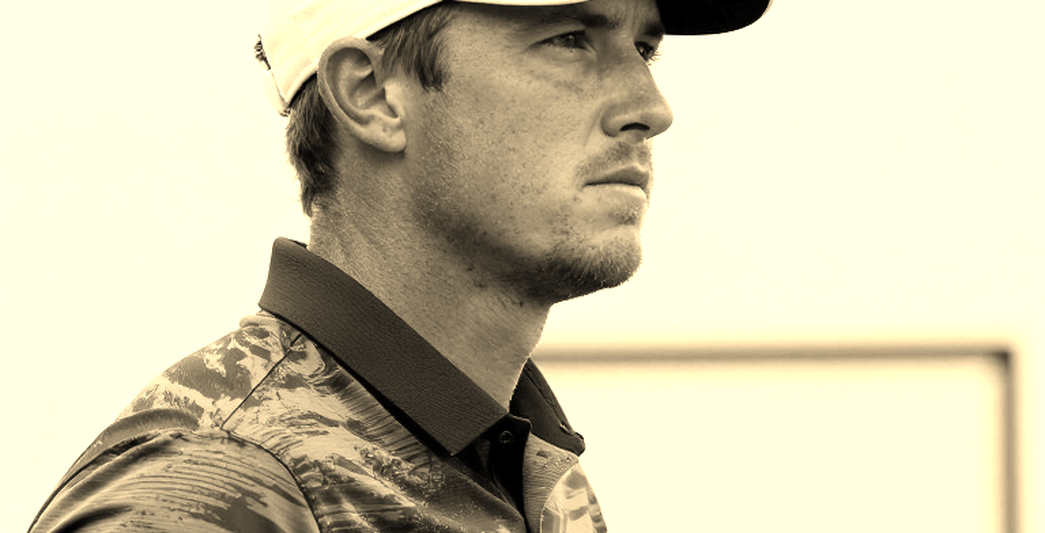
Now the man the story rests on. Joel Dahmen — one PGA Tour title, at the 2026 Corales Puntacana, an opposite-field-tier event. Two top-10s this season. 128th in the FedExCup Fall standings. That last number is the most important number in this article, and the original reporting under-weights it. The 125 line decides full status for next season; players stuck between 126 and 150 fall to conditional status, which means later entry each week, no freedom to pick a schedule, and cap in hand for sponsor exemptions. 128th means three places below the line.
So this week Dahmen is not playing for a trophy story. He is playing to save his card. And the money arithmetic here is brutal. A full PGA Tour season — caddie at 8 to 10 percent, travel, lodging, coach, physio, entry fees — lands somewhere between $300,000 and $500,000, and the player pays it himself. If you are outside the top 125, that money goes out before anything comes in. Against that, what does a win deliver: a winner's share of roughly $1.2 million on a $6.5–7 million purse, a two-year exemption, an invitation to Augusta, and the door to winners-only events like the Sentry. One week changes your economics for two years. That is why you should not mistake a weak Fall field for a low-stakes one — motivation is at its sharpest there, because every man in it is playing scared of losing something.
Read the opening 65 in that context. Six under on a par 71 — the arithmetic is simple: subtract six from 71. It is a good round, not a bad one. But on a day when the leader shot 62, 65 is not a commanding position. It is a live score in a shootout where winning may require something near 20 under. For Dahmen that means: he does not have to defend, he has to win. And winning at Port Royal means adding 15 or 16 under across three rounds, on a course where the wind gets up in the afternoon.
Which brings up a small thing that gets buried under the word 'tee time' in any viewing guide: Dahmen is in the 6:46 a.m. early wave for Round 2. Bermuda's morning wind is generally lighter than its afternoon wind. This is not a decisive edge, but it is a variable that will show up on the scoreboard and that nobody has priced. I do not have a forecast in front of me, so I will call it a small possible advantage and no more.
Now the other side, which I should state in its strongest form first, because it is not weak. The mainstream argument runs like this: Dahmen has been one of the game's most popular faces since Netflix's Full Swing, he has won once, he shot 65 on Thursday, he is three back with 54 holes to play — that is the setup for a great story, and the sport needs such stories. That argument is correct on its own terms. Popularity is real capital; the Tour sells tickets on exactly that.
But when I put the numbers in front of it, it does not hold. Two top-10s in a season and 128th place is a decline signal, not a resurgence. The word 'comeback' is injury-return language pasted onto a performance slump. Dahmen never went anywhere; he was playing and living around the cut line. The distinction matters, because a player returning from injury trends upward and a player in a form slump does not. And one 65 does not reverse a trend. Golf's biggest single-round lie is that a 65 often comes from one segment — usually putting, the most volatile skill in the game. Yesterday's 65 does not guarantee yesterday's putter.
Here I owe a correction on one of my own forecasts. In 2026 I wrote that the FedExCup Fall would not survive three seasons — that post-September golf would be shut down for lack of crowds and ratings. Wrong. Four seasons have passed and the series is still running, just restructured. My error was treating it as a product; it is not a product, it is a status mechanism. The Tour has to decide at the end of the year who plays next year, sponsors need fourth-quarter inventory, and broadcasters need no hole in the calendar. The audience ranks third in that equation. That was the lesson, and it is why dismissing an event like Bermuda as a small tournament is a mistake — it is the most honest sample of the machinery.
And there is one non-commercial variable I want to give real weight here, because treating every problem as a monetisation failure is an old sin of mine. Port Royal is a government-owned public course — which means a Bermudian junior can practise on the same ground the PGA Tour plays. That is close to unimaginable in India, where tour events sit inside private clubs with security at the gate. Bermuda has 64,000 people and one championship course; that is not a small market, it is a dense one. The tournament's junior clinic and local caddie pipeline are the parts that never show up on a balance sheet and are probably the most solid reason the event keeps running. If Butterfield ever walks, the first thing to go will not be the trophy. It will be the clinic.
So what should you watch on Friday? Not Dahmen's number on the scoreboard — his standing. If he gets inside 125, the week worked, whoever lifts the trophy. If Blanchet or anyone else repeats a 62-level round, a −6 score becomes irrelevant fast. And if the wind gets up in the afternoon, the whole benefit of the morning wave accrues to men whose names are not in any press release.
The question I am carrying home is this: how long can a tour whose economic model rests on sponsorship and a status mechanism keep selling its players 'comeback stories' to cover the fear that is the real emotion of every Fall series — the fear of losing a card? There are 120 players in the field in Bermuda this week. At least half of them are not playing for the trophy; they are playing for next year's entry. Nobody counted them.
संबंधित खिलाड़ी
अनुशंसित
Nelly Korda, the Divot, and a Rule She Wants Abolished2026-10-23
The Scoreboard That Never Settled: Indian Golf's Empty Return and the Near-Miss Ledger2026-10-23
When the Golf Feed Returns Null: Ten Fields of N/A and the Invoice Nobody Sends2026-10-23
Blanchet's 62, Dahmen's 65, and the 128th Place Nobody Put in the Release2026-10-24
अनुशंसित
When the Golf Feed Returns Null: Ten Fields of N/A and the Invoice Nobody Sends2026-10-23
Blanchet's 62, Dahmen's 65, and the 128th Place Nobody Put in the Release2026-10-24
Nelly Korda, the Divot, and a Rule She Wants Abolished2026-10-23
The Scoreboard That Never Settled: Indian Golf's Empty Return and the Near-Miss Ledger2026-10-23