
The 'Chase Master' Tag on Christchurch's Slow Pitch: A Ledger, a Clause and One Ball
**मुख्य उत्तर:** तिलक वर्मा ने क्राइस्टचर्च के हाग्ले ओवल पर 181 के लक्ष्य का पीछा करते हुए 26 गेंदों पर 51 रन नाबाद बनाए और भारत एक गेंद शेष रहते जीता; उनकी पारी दो गति में बनी — पहली 13 गेंद पर 17 रन (स्ट्राइक रेट 130.8), अगली 13 गेंद पर 34 रन (स्ट्राइक रेट 261.5)। **मुख्य तथ्य:** - भारत 69/4 और फिर 112/6 पर गिरा; मिचेल सैंटनर ने 21 रन पर चार विकेट लिए। - तिलक की मैच स्ट्राइक रेट 196.2 रही, जो एलीट डेथ-ओवर फिनिशर बेंचमार्क 180+ से ऊपर है। - "चेज़ में 26 नाबाद पारियां, 100% जीत दर" आंकड़ा टॉटोलॉजिकल है, भविष्यवाणी मूल्य कम। - 26 का आंकड़ा फ्रेंचाइज़ी, घरेलू और अंतरराष्ट्रीय टी20 को जोड़ता है, इसलिए गप्टिल (23) से सीधी तुलना असमान है। - क्राइस्टचर्च की पिच उस दिन धीमी थी, यानी यह पारी तेज़-उछाल वाली पिचों का टेम्पलेट नहीं है। **स्रोत:** मूल मैच रिपोर्ट एवं स्टेज-1 सूचना बिंदु (29 बिंदु); प्रकाशन तिथि उपलब्ध नहीं — टॉस, डेथ गेंदबाज़ की पहचान और करियर स्प्लिट्स सत्यापन लंबित। **संबंधित प्रश्न-उत्तर:** - प्रश्न: क्या तिलक वर्मा का 'चेज़ मास्टर' तमगा आंकड़ों से सिद्ध है? उत्तर: नहीं, 26 नाबाद चेज़ पारियों की 100% जीत दर परिभाषा से बनती है, असली संकेतक अंत तक डटे रहने की मात्रा है। - प्रश्न: उनकी पारी का सबसे मज़बूत तकनीकी सबूत क्या है? उत्तर: बाएं हाथ के ऑर्थोडॉक्स स्पिन के स्पेल (4/21) को झेलकर दो अलग गति से रन बनाना। - प्रश्न: उनके करियर पर सबसे बड़ा जोखिम क्या है? उत्तर: नंबर 6-7 पर लगातार सफलता उन्हें वहीं स्थायी कर देती है, जिससे नंबर 3 की उनकी मंशा और टेस्ट दावे सीमित होते हैं।
19.5 overs. Target 181. Hagley Oval, Christchurch — a surface where the ball does not arrive at the bat so much as leave it. Tilak Varma finished 51 not out off 26 balls, and India crossed the line with one ball to spare. The scoreboard printed a fifty; the market immediately printed a label: T20's new 'Chase Master'. What the scoreboard did not print was the moment India stood at 112 for 6, with the asking rate sitting in the 12-to-14 runs-per-over band.
The real opponent that evening was Mitchell Santner. The left-arm orthodox spinner took 4 for 21, and India's middle order fell first to 69 for 4 and then to 112 for 6. Christchurch normally offers pace and bounce, a ground where 180 is a par score; that day the ball held up, and every attempt at hurry was paid for with a wicket. Winning such a chase off the last ball is a victory of process, not of dominance. A one-ball margin means the result sat inside the noise band: a single dot ball, a boundary saved in the deep, or one wicket at the other end flips the equation. No report should read that margin as evidence of team-level superiority.
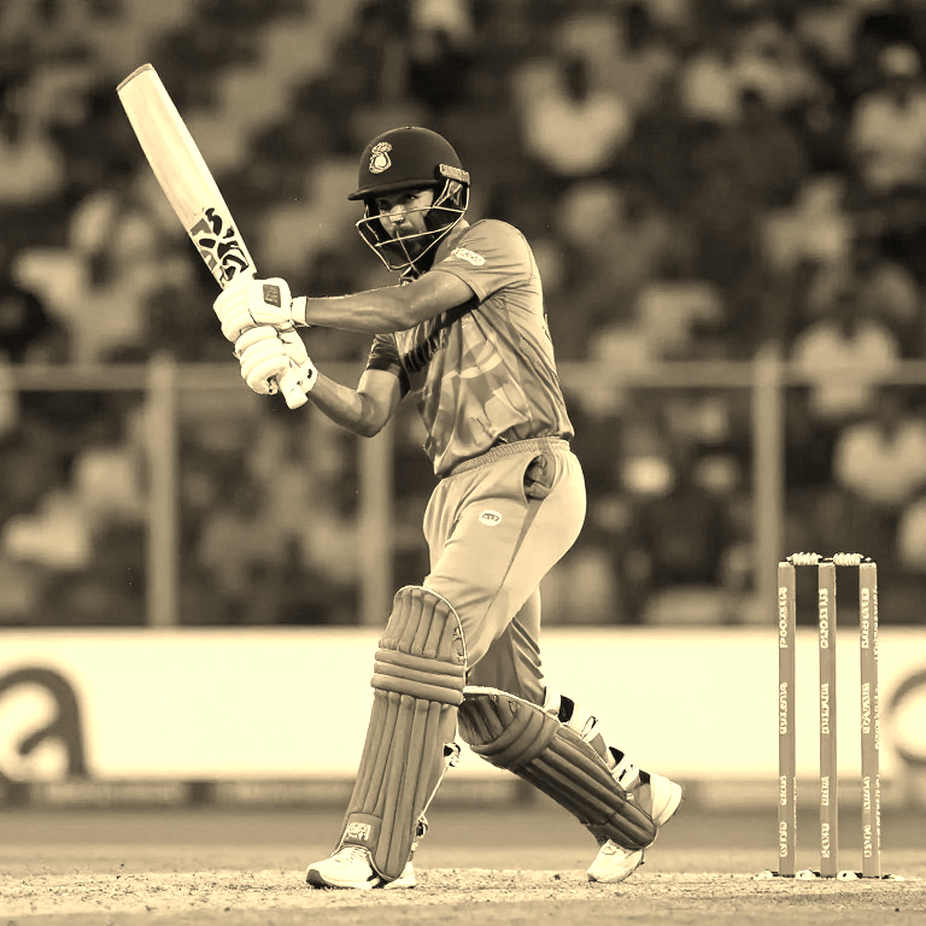
What matters most about Tilak's innings is not the fifty but the two-speed construction. The first 13 balls produced 17 runs at a strike rate of 130.8 — the cost of reading a slow surface, because a batter who forced the pace against Santner's turning ball would have edged to the keeper. The next 13 balls produced 34 runs at 261.5 — the interest collected once set. My years of watching matches have given me one habit: the stopwatch. It never argues; it simply keeps the time everyone else disputes. Here it gives us 26 balls, and those 26 have to be read in two halves. That is the line between a finisher and a slogger: a genuine finisher can buy the first 13 balls and then charge 261 for them. A batter who cannot do the first part is a lower-order hitter, not a finisher.
Now the ledger audit of the tag itself. The statistic doing the rounds — 26 unbeaten chase innings, a hundred per cent win rate — is close to tautological. In a completed chase, a batter still unbeaten at the end is by definition on the winning side; the only routes to defeat while not out are being stranded at the non-striker's end, a tie, or a Super Over loss. That 100% carries almost no predictive value. What is genuinely informative is the volume: batting through to the finish 26 times is a temperament and role indicator, not a causation argument. The comparisons need care too. Martin Guptill's 23 and James Vince's 31 are being lined up alongside it, and Vince loses one unbeaten chase to a no-result — described in the reporting as misfortune. In fact that is a definitional choice wearing the costume of fate: the exclusion of no-results created the record, not a difference in batting quality.
And the figure of 26 aggregates franchise, domestic and international T20 cricket. Opposition quality and team strength are not equal across those competitions, so a straight comparison with Guptill or Vince is a cross-competition comparison. The same caution applies to the record of being the first India batter to score a fifty at No. 6 or lower in a successful chase. India historically staffed that slot with a bowling all-rounder, so the denominator is tiny. It is a media-friendly artefact with almost no signal about ability.
The technical examination he actually passed was against left-arm orthodox spin. For a left-hand batter, Santner's ball turns away, bringing the edge and the outside-the-line risk into play on every delivery. Surviving the spell that returned 4 for 21 and then scoring at will is more probative than the raw fifty. That evening I was not watching the batter's graph; I was watching the bowler's fingers. The fingers said this innings was made on a difficult pitch, in a difficult matchup.
There is a live friction in his career map. Tilak wants to bat at No. 3; the team is using him at No. 6 or 7. Every success in that slot entrenches him there. It is a gain for the side and a ceiling for his batting average and his Test claims, where the No. 6 job description is entirely different. The coaching staff — Gautam Gambhir and Sitanshu Kotak — matter precisely here: is the finisher role a permanent assignment or a temporary need?
This is where emotion and rule collide. Emotion says a last-ball masterclass demands the title. Rule says a single 26-ball sample, one slow pitch and an unreported toss block any stable conclusion. That pitch, in particular, is not a template. The genuine test for an Indian finisher still waits on the bouncier surfaces of Perth, Johannesburg or an English early season, where a strike rate of 261 does not transfer; small-ball selection does. What the report omits matters as much as what it contains: the toss result, dew, the identity of the death bowlers, and Tilak's career average and strike rate with the No. 3 versus No. 6 split. Without them it is impossible to say whether we watched a finisher with an elite closing gear or a top-order batter temporarily repurposed.
The question ahead is not whether Tilak is a chase master. It is whether India's chase architecture is being built around one No. 6 batter who is still early in his career. The more the team depends on him, the higher the cost of his absence. The ledger opened at Christchurch records its first entry plainly: the middle order fell to 112 for 6 against left-arm spin, and a 22-year-old had to rescue it. The next time this side faces that same spin, the thing to watch is whether the same one man is called again.
संबंधित खिलाड़ी
अनुशंसित
The Price of a Blank Cell: Cricket Analytics' Most Expensive Error Looks Like a Clean Report2026-10-24
When the Scorecard Arrives Blank: The Corner of Cricket Reporting Where Guesswork Does Not Sit2026-10-26
Mohammad Ashraful's Exit: Bangladesh Removes Batting Coach Three Days Before Mirpur Test, Without Stating a Reason2026-10-25
Mirpur Test: The Decision to Skip a Third Opener Is Slot Arithmetic, Not Cricket2026-10-24
Another Century for Robin: The NCL Ledger From 400 to 500, and the Selector's Careful Vocabulary2026-10-24
A Missile Report Inside the Cricket Feed: A Data-Integrity Audit of a Misclassification2026-10-25
The Empty Sheet and the Full Auction: Why Zero Is the Most Dangerous Number in Cricket's Data Pipeline2026-10-23
अनुशंसित
Another Century for Robin: The NCL Ledger From 400 to 500, and the Selector's Careful Vocabulary2026-10-24
Mirpur's 371/7 Isn't Telling the Truth: The Real Ledger Behind Bangladesh's Test Pivot2026-10-24
Eight Sections Complete, Evidence Zero: The Cricket Analysis File That Came Back Empty2026-10-23
Kishan's Adductor and Wellington's Wind: Three Unasked Questions Before the Third T202026-10-26
Shaheen Afridi's 150 ODI Wickets: The 80-Match Count Measures Selection Continuity, Not Greatness2026-10-26
80 Overs, 336 Runs, Zero Centuries: The Three Different Batting Clocks Inside the BCB XI–West Indies Warm-Up2026-10-24
Not the 121-Run Margin — Read Zimbabwe's 48.5 Overs: The Real Ledger of India's Win in Vadodara2026-10-26