
Justin Hubner's 8.0 and Ole Romeny's 6.1: The Rating That Measures Workload, Not Walls
**मुख्य उत्तर (≤60 शब्द)**: जस्टिन हबनर ने 2026-27 एरेडिवीज़ी सीज़न में एक्सेल्सियर के खिलाफ फोटमॉब पर 8.0 रेटिंग पाई, जो कम गेंद-नियंत्रण वाली फोर्चुना सिटार्ड टीम में उनके डिफेंसिव वर्कलोड और क्लीन शीट का परिणाम है — उनके ओपन-प्ले निर्माण का प्रमाण नहीं। **मुख्य तथ्य**: - हबनर (23) ने पहले हाफ में 34 टच, 3 टैकल, 1 इंटरसेप्शन, 2 रिकवरी और 3 ग्राउंड ड्यूएल जीते। - हाफ टाइम पर फोटमॉब रेटिंग 7.0 थी, पूरे मैच के बाद 8.0 हो गई। - फोर्चुना सिटार्ड ने एक्सेल्सियर को 1-0 से हराया; जीत का गोल रोड्रिगो गुथ ने किया। - हबनर के दोनों हेडर शिलोह ज़ांड के कोनेर से आए — 65वें मिनट में बाहर, 77वें में लाइन पर क्लियर। - ओले रोमेनी हाफ टाइम पर 0-0 की स्थिति में आए और उनकी रेटिंग 6.1 रही। **स्रोत**: VIVA (इंडोनेशियाई समाचार पोर्टल); रेटिंग डेटा का मूल स्रोत FotMob; प्रकाशन तिथि स्रोत सामग्री में उपलब्ध नहीं। **संबंधित प्रश्नोत्तर**: प्रश्न: क्या 8.0 रेटिंग हबनर की वास्तविक क्षमता दर्शाती है? उत्तर: नहीं — यह एल्गोरिद्म आधारित संकेत है जो बचाव वाली टीम में जमा हुए एक्शन और क्लीन शीट को इनाम देता है, आधिकारिक मीट्रिक नहीं। प्रश्न: हबनर और रोमेनी की रेटिंग की तुलना क्यों अमान्य है? उत्तर: क्योंकि डिफेंडर और हाफ-टाइम पर आए स्ट्राइकर के एक्शन-इकॉनमी, मिनट और टीम-संदर्भ अलग हैं, इसलिए 8.0 बनाम 6.1 कोई पदानुक्रम नहीं है। प्रश्न: इस मैच से फोर्चुना सिटार्ड के बारे में क्या निष्कर्ष निकलता है? उत्तर: एक-गोल की देर से आई जीत और डेड-बॉल पर निर्भरता उच्च-उतार-चढ़ाव वाला प्रोफ़ाइल है, जो बेहतर मौका-निर्माण के बिना माध्य की ओर लौटेगा।
Here is a number that ends this argument: 8.0. Against Excelsior, Justin Hubner touched the ball 34 times in the first 45 minutes, made three tackles, one interception, two recoveries, won three ground duels and completed three of four long passes. At half-time FotMob had him at 7.0. At full time, 8.0. The scoreboard read 1-0, and the Indonesian headline said "like a solid wall." Let me show you the receipts, because I agree with that headline halfway and disagree with it entirely. And the half I reject is the most interesting part of the whole match.
The shape of the game is simple. A home fixture at the Offermans Joosten Stadion, Danny Buijs's side, Excelsior the visitors. 0-0 at the interval. In the 65th minute Hubner headed wide from a Shiloh Zand corner; in the 77th his second header was cleared off the line; the winning goal eventually came from Brazilian centre-back Rodrigo Guth. This is a very familiar shape of club football: little of the ball, a deep block, threat from dead balls, a result decided at the death.
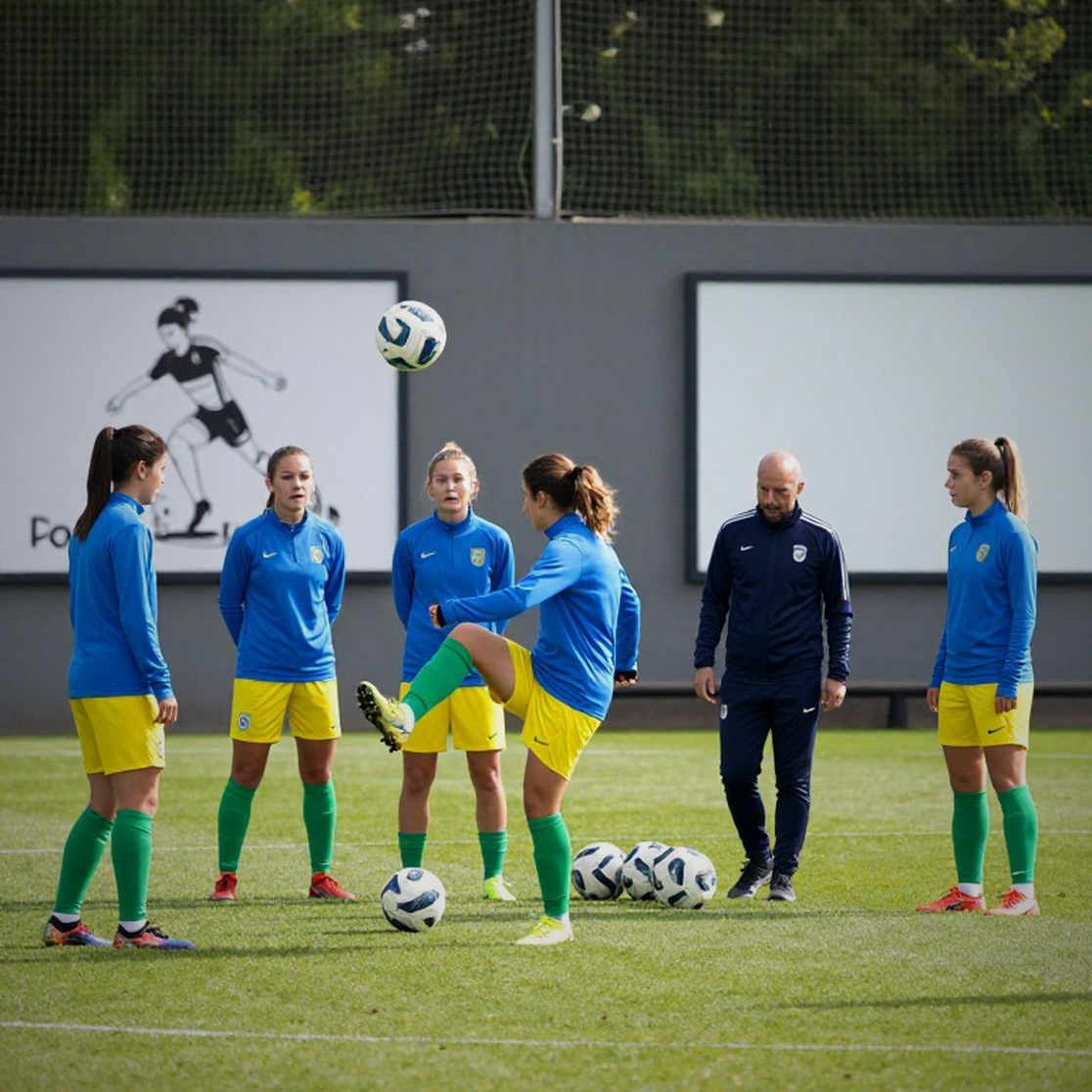
But this piece was not written for a Dutch reader. Its real audience is Indonesia, and its real subject is not Fortuna Sittard but the Indonesian national team. Two Indonesian internationals at one Dutch club — Hubner and striker Ole Romeny. Hubner is 23. Romeny came on at half-time for Sven Simons at 0-0 and was given 6.1.
Let me settle one basic point, because the media conflates it daily: club form and national-team readiness are not the same question. A Dutch club's 1-0 and the performance of an Indonesian international inside that club are two separate files. Anyone who merges them is stacking the next two years of mistakes in one place.
Now the part this piece exists for.

When left-back Nick de Groot advanced, Hubner repeatedly filled the vacated channel on the left. It is the oldest page in the coaching manual — the rest-defence cover shift. The left-sided centre-back stays behind, the full-back provides width and progression, the adjacent centre-back absorbs the space. It is not a novel design. AZ, Twente and Utrecht run it with better players and better execution. Nothing new happened on that pitch. What is new is the measuring machine.
The 8.0 is not a certificate for a wall; it is a receipt for a team's defensive workload. Three tackles, an interception, two recoveries and three ground duels in 45 minutes is very high action density — and that density only accumulates in a side that surrenders territory and defends its box. Algorithmic ratings reward accumulated defensive actions and clean sheets. They do not dock a defender because his team had 40 percent of the ball rather than 65. So the correct translation of 8.0 is "excellent within role." It is not "dominant in absolute terms."
What this number cannot tell you is what those same 45 minutes look like against the press of PSV, Ajax or Feyenoord. There is no data on recovery pace, none on 1v1 defending in open space, none on build-up under pressure. What we have is a snapshot of one defensive half — and explicitly the first half, where the numbers are recorded; nobody counted the second half's defensive volume at all.
Second, the thing the headline skipped. Hubner's two most notable attacking moments were headers from Zand corners — wide on 65, cleared off the line on 77. The winner came from a centre-back. This is the archetypal one-goal, high-variance win. Three points are banked; the process is unproven. Such results regress to the mean unless chance creation improves. That is a warning about the team, not about Hubner.
Third — and here is the biggest journalistic theft in this article. A defender's 8.0 and a half-time substitute centre-forward's 6.1 are not commensurable. A striker in a low-possession side receives few passes, contests few duels, takes no shots, and therefore scores badly regardless of how good his movement was. 8.0 versus 6.1 is not a hierarchy; it is a narrative device. And there is something buried inside it: being withdrawn at 0-0 at half-time means Romeny is not currently the undisputed No.9. He is in squad competition, not in possession of the shirt.
Now the point that makes this whole episode relevant to Jakarta and to Delhi alike.

A nation of 280 million is reading its national team's health off a Dutch club's rating page. That is not an accusation against players. It is an accusation against structure. And it is an accusation I find familiar, because I have watched it in India for two decades — every minute of an exported player gets more space than every story from the domestic league combined.
Let me take you to Doha, January 2026. Asian Cup, three matches, thirteen conceded, three scored. On a panel there I argued that the 2026 AFC Challenge Cup title had not ended a 24-year drought so much as opened a second-tier door — and walking through that door to measure the real distance produced exactly that result. An 8.0 earned inside a low block is that same kind of door. It gets you into the argument. It does not get you to the ceiling.
One credit must be recorded alongside, because permanent warning is not journalism, it is a habit. Fortuna Sittard spotted a market in heritage and naturalised players at low fees and acquired what is rare for a club of their size: a vast, emotionally invested overseas audience. The mechanism works. It is not football development, but it is a commercial line item, and pretending otherwise is foolish.
Now the part where I allow myself to be proven wrong, because the weakness in all three of my numbers is the same: the sample size is one.
If Hubner sustains a 7.5-plus average across a full season, if he reproduces these figures against the top three's pressing, my entire argument — that this was context, not capability — collapses. Then the 8.0 would be evidence of ceiling rather than a receipt for workload. I have no xG, xGA, PPDA or possession figures; I have first-half data only; and algorithmic ratings are a directional indicator, never an official metric. I write that myself so nobody else has to.
The biggest unknown is not in the data but in the contract. Nobody has said how long Hubner's deal runs. If he is inside the final 18 months, the sale window is open now and the leverage sits with the buyer, not the club. A 23-year-old centre-back holding 7.5-plus across a season is precisely the profile Belgian, Championship and Eredivisie subtop clubs buy. One 8.0 does not create that interest. A season of them does.
And one last warning, from media mechanics. Once a player is publicly labelled 8.0, a perfectly normal 6.9 or 7.1 will be reported as decline. That is a rating ratchet. Not a football risk — a coverage risk, which feeds straight back into player confidence.
So my testable guess: if Hubner's next three fixtures come with under 40 percent possession against top-six pressing and his rating still holds above 7.3, I retract, publicly, in this same column. If it drops to 6.5, this piece was right, and nobody needs to write that something broke.
The real question is not how well Hubner played. It is how many more years Indonesia will read its national team through Sittard's rating page. The day that answer changes, these 8.0 headlines change with it.