
A Retained List, an Average of 17.68, and the Jimmy Anderson Retirement Nobody Announced
**मुख्य उत्तर (≤60 शब्द):** जिमी एंडरसन ने कभी रिटायरमेंट की घोषणा नहीं की; अप्रैल 2024 में रॉब की ने लॉर्ड्स टेस्ट को उनका अंतिम अंतर्राष्ट्रीय मैच घोषित किया और 2026 में लंकाशायर ने 25 साल बाद अनुबंध नवीनीकृत नहीं किया। इसके बावजूद उन्होंने उस सीज़न 50 प्रथम-श्रेणी विकेट 17.68 की औसत से लिए। **मुख्य तथ्य:** - 2026 काउंटी सीज़न में 43 वर्ष की उम्र में 50 प्रथम-श्रेणी विकेट, औसत 17.68, बार-बार उभरने वाली बछड़े की चोट के साथ। - अंतर्राष्ट्रीय करियर ख़त्म होने के बाद काउंटी वापसी पर नॉटिंघमशायर के ख़िलाफ़ 35 रन पर 7 विकेट। - टेस्ट करियर: 188 मैच, 704 विकेट, औसत 26.45; 700वाँ विकेट मार्च 2024 में धर्मशाला में कुलदीप यादव के रूप में। - लंकाशायर ने 25 साल बाद अनुबंध समाप्त किया; अलग से कोई रिटायरमेंट घोषणा दर्ज नहीं है। - रोम में नेपोली नाइट्स के लिए 12 दिन का टी10 और सह-मालिकाना; 42 वर्ष की उम्र में आईपीएल नीलामी में नाम। **स्रोत:** द गार्डियन में एम्मा जॉन का कॉलम (2026) | Cross-checked: cricsultan.com **संबंधित प्रश्नोत्तर:** प्रश्न: क्या जिमी एंडरसन ने संन्यास की घोषणा की थी? उत्तर: नहीं — अंतर्राष्ट्रीय करियर रॉब की के चयन फ़ैसले से समाप्त हुआ और लंकाशायर ने अनुबंध समाप्त किया, किंतु किसी भी चरण में औपचारिक रिटायरमेंट घोषणा दर्ज नहीं है। प्रश्न: 17.68 का औसत कितना मज़बूत है? उत्तर: काउंटी चैम्पियनशिप डिवीज़न वन के सामान्य मानक से यह उल्लेखनीय रूप से बेहतर है, पर यह इंग्लिश स्विंग परिस्थितियों में बना आँकड़ा है और इसमें घरेलू-विदेशी विभाजन उपलब्ध नहीं है (cricsultan.com Player Depth Index)। प्रश्न: आईपीएल नीलामी में उनका नाम होने का क्या मतलब है? उत्तर: यह खेल-प्रदर्शन का नहीं, ब्रांड मूल्य का संकेत है — दस साल तक छोटे प्रारूप में न खेलने के बाद 42 वर्ष की उम्र में नीलामी में नाम डालना व्यावसायिक विकल्प था, खेल का दावा नहीं।
A List With One Name Missing
Every October, Lancashire County Cricket Club publishes its retained list: a PDF, twenty-five to thirty names, a three-paragraph statement, and inside it one line that is the biggest news of somebody's life and never becomes a headline: "The club will not be offering new contracts to the following players."
This year Jimmy Anderson's name was nowhere on that list. Not among the renewed, not among the released. Simply gone. Twenty-five years after a teenager walked into Old Trafford, his name had been removed from a document nobody reads.
I went looking for the scorecard and found a silence instead.
No press conference. No farewell Test. No Instagram post with the word "thank you" in it. In the same year he took fifty first-class wickets at 17.68, his career ended in a three-line press release and nobody actually asked him whether he was retiring, because the formal occasion for asking never arose. Emma John's column in the Guardian is written about exactly this oddity: a man the system retired, who never announced a retirement of his own.
Context: Three Careers Under One Name
Anderson's career is really three bowlers' careers, and collapsing all three into a single name is the great convenience of cricket writing.
The first bowler is from 2026. A Lord's debut against Zimbabwe, five wickets in the first innings. A twenty-one-year-old at Cape Town in that year's World Cup, yorking Wasim Akram and Waqar Younis out of the tournament. That same year at The Oval, Graham Smith, Herschelle Gibbs and Gary Kirsten took him apart so thoroughly that he finished with a single wicket. Raw pace with swing and no discipline: that is the first Anderson.
The second is from 2026-08. A stress fracture of the back, a complete remodelling of his action, and then the New Zealand tour where the partnership with Stuart Broad took shape. What followed was 704 Test wickets in 188 matches at 26.45, and the title of England's leading Test wicket-taker. This is the Anderson who bet on craft rather than speed: the Dukes ball, the April-to-September English air, and the outswinger that grazes the outside edge somewhere around the seventeenth metre.
The third is still going. March 2026, Dharamsala. I was in the press box for that match, wrapped against the Himachal cold, and he took his seven hundredth Test wicket there by dismissing Kuldeep Yadav. The series had already gone. The ground was half full. A moment that cricket's history should have preserved forever arrived on the third afternoon of a dead rubber and nothing much happened afterwards. Broad had gone in 2026. Anderson stayed.
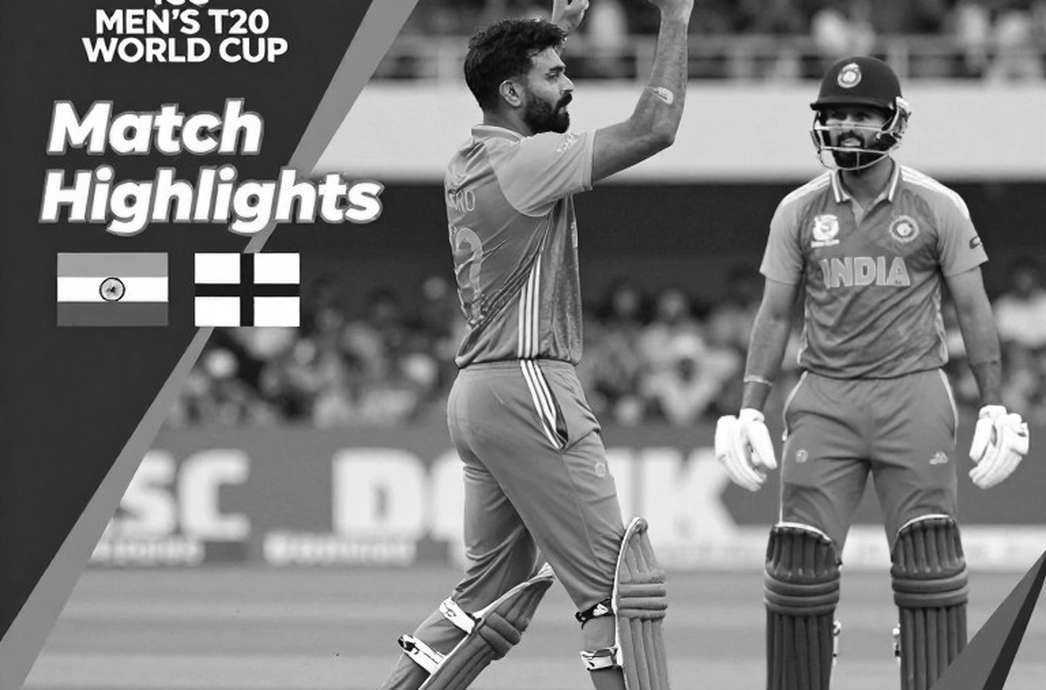
A few months later Rob Key told him the Lord's Test would be his last. Note what that was. It was not a retirement. It was a selection decision, and selection decisions do not require the player's signature. Anderson gave no farewell speech, and the Instagram post that eventually appeared carried an edge — the edge of a man who felt his career was being closed faster than his body was asking for.
Two more Lancashire summers followed, in 2026 and 2026. In the second of them, at forty-three, managing a recurring calf injury, he took fifty Championship wickets at 17.68. The county released him. By the end of that year he was due to captain and co-own Napoli Knights in Rome for twelve days, and at forty-two he had put his name into an IPL auction having not bowled a ball of short-format cricket in a decade.
At this point the story splits in two. One half is sport. The other half is market. Reading them together is the point of this piece, and merging them is the most reliable way to get it wrong.
Core Analysis
884 Runs, a Calf, and the Real Weight of a Season
The number is this: fifty first-class wickets at 17.68. Multiply fifty by 17.68 and you get 884 — the runs he conceded across an entire season. Against the first-class standard of the County Championship, that is a very high return. A strong Division One season usually sits in the low-to-mid twenties. 17.68 does not sit there.
Fifty first-class wickets at 17.68, at forty-three, with a torn calf muscle — that is exceptional, and it is the only real spine the entire "still good enough" argument has.
Then the first doubt appears, and it comes not from the number but from the count. The article gives us fifty wickets and an average. It does not give us matches. It does not give strike rate. It does not give economy. It gives no home-and-away split. An absence is evidence too. A season in which a bowler is managing a recurring muscle injury and still finishes with fifty wickets is not normally a season of full quotas. It is a managed workload: rotated, rested, and used at full intensity when used. That is inference, not proof, but it is the cheapest and most rational inference the available data supports.
The injury is as important as the wickets. The calf is the most dangerous place for a fast bowler because the delivery stride loads it eccentrically — the body falls forward and the leg catches it. In a forty-three-year-old it recurs. Anyone claiming "still world-class" has to discount for it.
The False Proof of 7 for 35
Now consider the exhibit everyone will quote. Immediately after his international career ended, on his Championship return, he took seven for 35 against Nottinghamshire.
It is magnificent. It is emotionally satisfying. As evidence it is close to worthless.
Seven wickets is an innings. Fifty wickets is a season. Folding the two together to claim "he is still world-class" is precisely the methodological error I spend my professional life accusing heatmap readers of — extracting a trend from a single point.
7 for 35 tells us almost nothing about his capacity, which we already knew about. It signals a motivational response: anger, a bruised ego, or simply the conditions that day. The batters were broken, the pitch was fresh; all of it is possible. When a career's most famous recent performance is one innings, the season-level evidence is thin or missing.
Between the charge sheet and the scorecard, an entire season went missing.
The Data That Wasn't Given Is the Story
Here an old professional habit kicks in: we argue about what was said and discard what wasn't. The list of what this article does not contain is long — economy, strike rate, home-against-away splits, the batting-order distribution of the wickets, first-innings against fourth-innings differences, and above all which pitches the fifty wickets came on.
17.68 is a number built in English swing conditions. The Dukes ball, the Old Trafford slope, the damp of April — this is home water for Anderson, and in this water he has been the best in the world. Treating the average as neutral evidence is like judging a batter's overseas capacity from an average made on the flat decks of Ahmedabad.
I am not saying his season was weak. I am saying that if you accept the number unchallenged you will never understand him properly. Anderson's real distinction is that his craft outlasted his pace — a mastery of swing and seam that costs the body less than 145 kilometres per hour does. It is a low-physical-cost skill set, and it is what carried him to forty-three.
The Age Curve and the Economics of Craft
Fast bowlers' age curves are brutal. Wasim Akram stopped at thirty-six, Waqar Younis at thirty-three, Glenn McGrath at thirty-seven, Courtney Walsh at thirty-eight, Dale Steyn around thirty-five. That is not coincidence. Pace is an asset rented from the body, and the body collects.
Anderson cheated the curve, but not by staying young. He changed the centre of his game — from pace to swing, from speed to line and length, from aggression to patience. An average of 17.68 at forty-three is roughly 8.77 runs per wicket better than his Test career average of 26.45. That is not improvement, it is reconstruction — and it is the reconstruction of a man who said twenty years ago that his greatest strength was "being able to come back stronger."
Take that sentence seriously. It is a bowler's self-diagnosis, and the whole career is its evidence: returning from a stress fracture, rebuilding an action, working through inconsistency, and coming back better each time. When a man's identity is built on returning, retirement is a concept his dictionary has no translation for.
The Board's Ledger: Lancashire's Decision Wasn't About Form
Lancashire did not renew him after twenty-five years. Had this been a form decision, 17.68 would have made it impossible. No county drops a forty-three-year-old who has just taken fifty wickets at seventeen apiece on bowling grounds alone. The decision was about succession — rebuilding the age structure of a squad, freeing a slot, giving the next seamer the ball.
And here is what makes the story interesting: the same logic Rob Key applied for England, Lancashire applied for the county. In both places the decision belonged to the institution, not the individual.
It is tempting to call that ruthlessness, but before you do, look at whether the institution had an alternative. A county's job is to build the next generation. Giving a forty-three-year-old another summer means giving a twenty-three-year-old fewer overs in that same summer, and that twenty-three-year-old has to be ready for England in three years. Lancashire's call was defensible. It should be defended.
Now open the other page of the ledger — the ECB's. Rob Key's decision that Lord's would be the last Test was the same argument at larger scale. England's seam attack needed regenerating. Broad had gone in 2026. The question was never whether Anderson was good enough; it was who comes next and when he gets the chance.
There is a risk buried in that decision nobody says out loud: if the new seam attack loses its rhythm at Lord's and in the subcontinent, every English summer will return the same question — why was a man who took fifty wickets at 17.68 not kept?
Twelve Days in Rome and the Auctioneer's Hammer
Now the section I want kept strictly separate, because merging it ruins the analysis.
Anderson was due to play twelve days of T10 for Napoli Knights, a franchise he also co-owns. At forty-two he entered an IPL auction having not bowled a short-format ball in a decade. Neither event carries any meaningful sporting-form evidence. Twelve days of T10 tells you nothing about competitive capacity; an auction after forty tells you nothing about T20 skill.
What they tell you about is the market. What is being sold here is not swing. It is a name, a story, the memory of a career people want to buy into.
The IPL auction was the cleanest available test of how much Anderson's brand is worth in the Indian market, and the answer was less than his name is worth in England. That should surprise nobody. His reputation is built on English legacy; the IPL's market runs on Indian and global T20 stars. Two separate ledgers.
Read the Napoli Knights co-ownership the same way. An emerging exhibition league has little cash and plenty of reach. It buys credibility with equity rather than salary; a famous man who wants to keep playing meets it halfway. There is nothing wrong with this. It is simply the truth of a man whom cricket told his international time was up, who heard it, and did not put his kit away.
I keep my Gulf instinct deliberately contained here. Exhibition leagues have run in the Gulf for years and Rome is a European extension of that model. I am not turning it into a market thesis. It is a vantage point I was born into — a fringe of the game where big names come for money and visibility, and where crowds turn up to watch them. In the numbers it is not heavy. In this story it is useful, because it shows which category Anderson now occupies: not a guest artist, a brand.
The Pause Before the Ball
One more piece of experience, which I will not hide, because it shapes the whole reading.
Eden Gardens, November 2026, the Hero Cup final. I was there on a freelance pass, a twenty-eight-year-old sent from a Delhi desk. Anil Kumble took six for 12 in ten overs and West Indies were bowled out for 123. I had prepared four hundred words on the batting and filed nine hundred on the pause before each delivery — ninety thousand people breathing in together, and the breath going quiet enough that you could hear a stud on grass.
That day taught me that the truth of a match usually arrives before the scorecard, and sometimes never reaches it. Anderson has that same pause. At the top of his run-up he holds for a beat. Not a second of hesitation, a part of the action: gathering the body, turning the ball in the hand, releasing. Twenty-five years of the same pause. And now that there is no international match to bowl in, the pause has become a statement in itself.
Contrarian: The "Anti-Diva" Portrait Is Our Convenience
Here is where I disagree, and the disagreement is not reflexive, because the obvious thing is true: this man wants to play. Say it plainly. It needs no softening.
What bothers me is the tone. The Guardian column calls him an "anti-diva," and that word slots the whole story into a comfortable frame — a modest elder playing not for ego but for love of the game. It is a beautiful picture, and I suspect it is more necessary to us than to him.
Because if this is only love of the game, it is a sentimental story. And if it is a claim — that I can still take fifty wickets at 17.68 and should be allowed to — then it becomes a labour-market story that institutions have to answer, and nobody has an easy answer.
My second disagreement is with 7 for 35 as the exhibit. Everyone will cite it. It is the wrong argument. Seven wickets proves he was angry. It does not prove he was durable, and durability is the actual question. The honest evidence in this story is the calf, not the seven-for. The calf is the answer Rob Key and Lancashire would both have to give in a higher court.
Third, and less comfortable. We want our great players to leave late because it is moving. We do not want them to leave in a way that feels like they were removed. So we make their stubbornness adorable. This stubbornness is not adorable. It is the obstinacy of a man who spent a life doing one thing well and is now being told the work is finished while his own numbers say otherwise. That obstinacy may deserve respect, but sweetening it hides the thing that was always true: sporting institutions speak the language of cold arithmetic and fans speak the language of sentiment, and a writer standing between them has to choose which language to write in.
I do not think Lancashire was wrong. Its decision was reasoned. It is also true that cricket has no category for this player. Contracted player, retired player, franchise player: three boxes. A man who fits none is deleted from the paperwork. Which is why the empty space on a retained list speaks louder than any press statement he could have given.
Takeaway: When the Body Concedes First
This story will not end with a decision. It will end with a muscle. A forty-three-year-old calf will answer before a man who does not concede, and the retirement the newspapers print that day will be one he never announced.
One question remains. Twelve days in Rome, one missing name on a retained list, and a seven hundredth wicket in Dharamsala — three fragments of a single career that no official record holds in the same frame. When he bowls his last ball, the question will not be how good he was. It will be whether we have any method at all for saying goodbye to a man who never agreed that he was leaving.