
South Africa's Newlands Blitz: 140/0 in 27 Overs as Test Cricket's Template Cracks
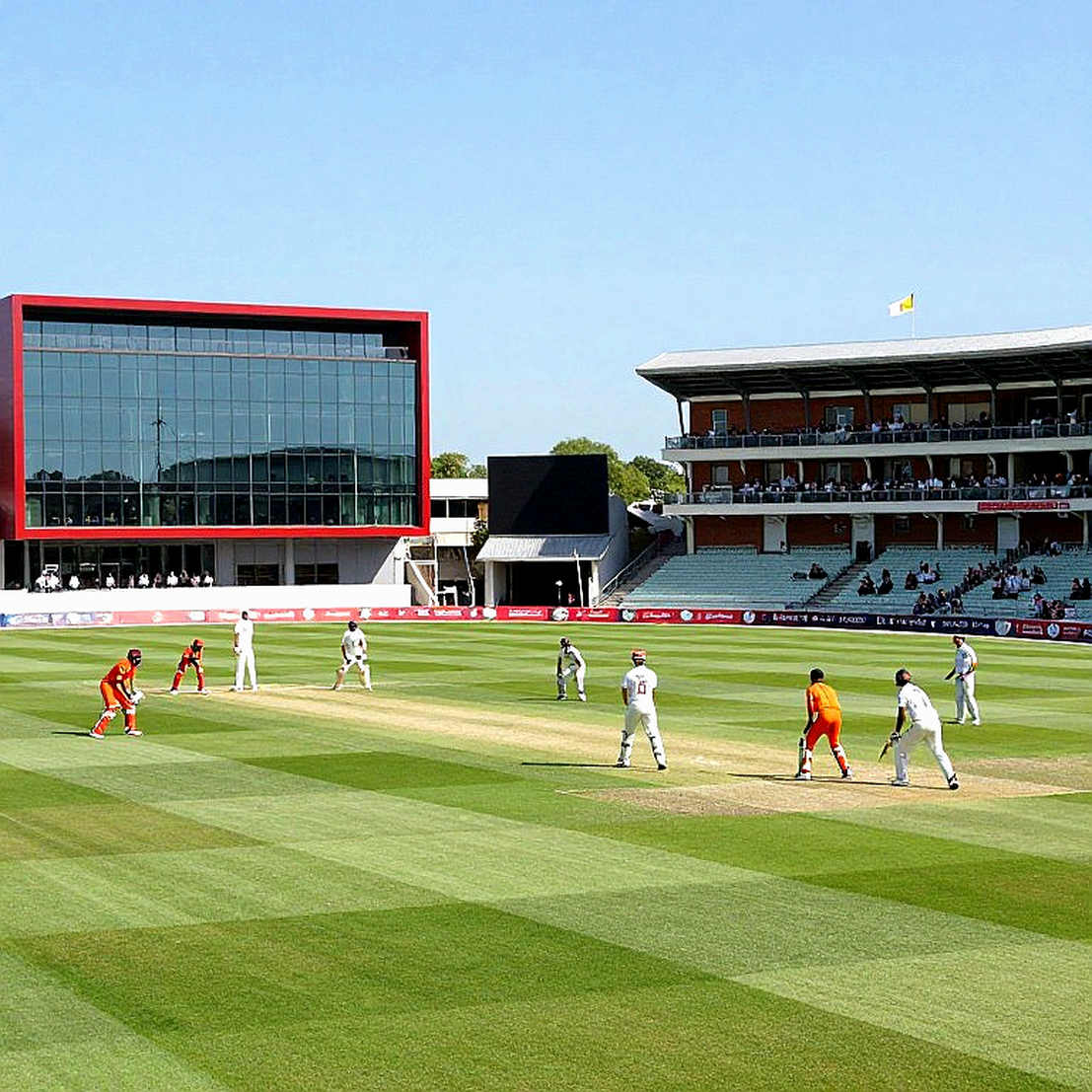
न्यूलैंड्स, केप टाउन में तीसरे निर्णायक टेस्ट के पहले दिन लंच तक दक्षिण अफ्रीका ने 27 ओवर में बिना विकेट 140 रन बनाए (रन रेट 5.19)। मार्कस एकरमैन 75 गेंदों पर 82* (स्ट्राइक रेट 109.3) और एडेन मार्करम 87 गेंदों पर 56* (स्ट्राइक रेट 64.4) पर नाबाद। साझेदारी का सामूहिक स्ट्राइक रेट 86.4। पैट कमिंस ने टॉस जीतकर पहले क्षेत्ररक्षण चुना, जो न्यूलैंड्स की पहले बल्लेबाजी की परंपरा के विपरीत है; ऑस्ट्रेलिया ने चार गेंदबाज इस्तेमाल किए, एक भी विकेट नहीं मिला। सीरीज 1-1 से बराबर है — पहला टेस्ट दक्षिण अफ्रीका 214 रन से हारी, दूसरा पारी और 31 रन से जीता। रिपोर्ट में किए गए 'नए टेस्ट रिकॉर्ड' के दावे का कोई स्रोत नहीं है; पुराना 126/0 (ब्लोमफोंटेन, 2017, बांग्लादेश के खिलाफ) संभवतः दक्षिण अफ्रीका का राष्ट्रीय रिकॉर्ड है, विश्व रिकॉर्ड नहीं — आईसीसी/सीएसए अभिलेखों से सत्यापन आवश्यक। खिलाड़ियों का करियर डेटा उपलब्ध नहीं; मौसम/हवा की जानकारी नहीं; ओवर रेट (27 ओवर प्रति सत्र) पर मामूली निगरानी संभव।
The first session of the first day of the third and deciding Test at Newlands, Cape Town, has shaken Test cricket's traditional image. At lunch, South Africa were 140 without loss in 27 overs — a run rate of 5.19 per over. The normal first-session run rate in Test cricket is roughly three to three-and-a-half per over, which means this session was about 55 per cent faster than the norm. The series is level at 1-1 and this match is the decider, so the significance of the session goes well beyond the numbers.
On the scorecard, both openers completed fifties, but their scoring tempo was not remotely similar. Marcus Ackermann was unbeaten on 82 off 75 balls, a strike rate of 109.3. Aiden Markram made 56 off 87 balls, a strike rate of 64.4. The combined partnership strike rate works out to 86.4. That figure tells the most interesting story of the innings, and it is precisely the point that early match coverage has flattened.
The context matters. The three-match series is level at 1-1 and this third Test is the decider. The first two Tests produced almost exactly opposite results. South Africa lost the first by 214 runs, then won the second by an innings and 31 runs. The same team, the same series, and such a chasm between the two margins — that in itself is a strong signal that this series has been shaped by pitches and conditions rather than by the teams' performance levels.
In the middle of all this, the most consequential tactical decision was the toss, and it has received relatively little attention. Australian captain Pat Cummins won the toss and elected to field. Newlands is conventionally a bat-first venue, because the pitch degrades progressively on days four and five. Cummins's choice runs against that convention.
The only possible logic behind the decision is morning moisture, a green tinge on the surface, or overhead cloud cover. If that read was correct, then failing to take a single wicket in the first session is not a failure of strategy but a failure of execution. But on the available information, the two cannot be separated. That is the biggest information gap in this match, and it is why any final judgment on the toss should be deliberately deferred.
Ackermann's innings deserves separate treatment. Eighty-two off 75 balls, a strike rate of 109.3, and all of it against the new ball in the early part of the session. A Test opener's par strike rate is roughly 45 to 55. A rate above 100 is a deliberately chosen tempo that does not come from orthodox technique but from a considered plan. It means Ackermann simply did not allow the bowlers to settle on a length.
But a caution is necessary here. Seventy-five balls is far too small a sample on which to judge a batter's technique or intent in Test cricket. A batter's real test comes when the ball is old, the pitch has slowed, reverse swing begins, and the bowlers are hitting one spot repeatedly. Ackermann's innings will only be properly evaluated in the next two sessions, when the same bowlers take the second new ball.
Markram's tempo is entirely different. A strike rate of 64.4 is slightly above par but fundamentally orthodox for a Test opener. This is the anchor role — holding one end while the other batter scores quickly. The method is perfectly legitimate in Test cricket, provided the anchor converts his start into a big score and does not stall the innings after the aggressor departs.
The real story here is not aggression but the asymmetry of aggression. Ackermann is going at 109.3, Markram at 64.4 — a gap of roughly 45 points. To describe the combined 86.4 partnership strike rate as 'both openers batted aggressively' is to round the data off. In reality these are two different kinds of innings running side by side.
This gap is not small. Had both batters played the same way, the score after 27 overs would either have been much higher or wickets would already have fallen. What has happened is that one batter took risk and was fully rewarded, while the other kept risk controlled. It is the most effective partnership structure there is, but it is not a two-pronged assault.
Now the claim at the centre of the coverage. The report says South Africa set a new record in Test cricket, and cites as the previous mark South Africa's own 126/0, made against Bangladesh at Bloemfontein in 2026. That claim needs to be read carefully, because no source is given for it.
The fact is that 126 without loss in a session cannot be a world record. In roughly 150 years of Test cricket, a hundred-plus without loss in a session on a flat pitch is not a rare event; it has happened many times. Treating 126/0 as the all-time world record does not stand up to reason. The likelier reading is that this is a South African national record being presented as a world record. Before any republication, it should be verified against ICC or Cricket South Africa statistical records.
On Australia's bowling: Cummins used four bowlers in the first 27 overs and none of them had any success. Using four bowlers is itself a signal that the captain tried different angles and different lengths, but no bowler could restrain the South African batters.
A distinction is necessary here, however. Using four bowlers is not the same as fielding a four-man attack. The available information records usage, not team composition. Concluding from it that Australia picked no all-rounder or had no fifth bowling option would be an over-read.
The genuine concern is workload concentration. The series is already two matches old. In the first session of the decider, four seamers bowled 27 overs for no wicket. If the pitch stays flat into day three, the pressure on the frontline quicks will escalate rapidly. This is a management problem for Australia, not a quality problem.
Now the debate that made this session news — does this look like Test cricket? A run rate of 5.19 is unusual, no question. But one session proves nothing about a format shift. It proves only that one batting side chose to attack, or was permitted to. If the same rate held for 130 overs it would be extraordinary. Over 27 overs it is a style choice whose sustainability is entirely untested.
The series pattern also offers an important clue. A 214-run defeat and an innings-and-31-run win are both extreme outcomes in their own way. When the type of margin swings this wildly within one series, it points to changing conditions rather than a team steadily improving. Those suggesting South Africa have turned a corner are drawing conclusions from pitches, not from skill.
And this is where the 'memories of Bangladesh' comparison becomes interesting. It is used as colour in the report, but in fact the comparison carries its own rebuttal. If South Africa's previous comparable feat came against a weak side like Bangladesh on a flat home pitch, the analogy itself raises the question of what this session against Australia is really worth.
On the pitch and conditions: Newlands has traditionally favoured the side batting first, but it deteriorates sharply on days four and five. That is exactly why the decision to field first matters so much. The team that chose to field clearly expected help in the early hours. That help did not arrive. The consequence is that Australia are now committed to batting last on a surface that conventionally breaks up.
There is no confirmed information about the weather or wind. Cape Town's south-easter is known for swing and drift, but no data on its role in this match has been supplied. No conclusion can therefore be drawn on that factor.
The real risk for Australia is now not in the bowling but in the order. Winning the toss and fielding means the team accepted fourth-innings uncertainty in exchange for early assistance. That assistance did not come, so the trade is currently underwater. If day one closes near 300 for two or three wickets, Australia's fourth-innings batting becomes the match's biggest variable.
What should be watched in the next session? First, the rate at which South Africa progress after lunch. Second, whether Markram converts his anchor role into a big score. Third, and most importantly, whether Australia can break the partnership with the second new ball or via reverse swing with the old one. If two wickets fall within ten overs of the resumption, the entire 'record session' narrative collapses.
Over rate also bears watching. A standard two-hour session should contain 30 overs, i.e. four minutes per over. Here 27 overs were bowled, roughly 4.4 minutes per over. Boundary-heavy sessions legitimately consume time retrieving the ball, but this figure sits in the range where match referees issue over-rate warnings or fines. It is not a major issue, but it is worth monitoring.
Pitch rating is another potential issue. If 140 without loss is posted in the first session and the match stays flat thereafter, the match referee could rate the surface 'below average' or 'poor'. That becomes a reputational question for the host board, Cricket South Africa — and in that scenario Cummins's toss decision would be vindicated strategically even though it failed in execution.
From a commercial and industry standpoint, there is no major signal in this match. This is a bilateral Test series, not a league. There is no auction, contract, ownership or broadcast-rights information. No conclusion can therefore be drawn from this session about any player's market value or any franchise's valuation.
One structural point can be made, however. A competitive South Africa–Australia Test series is one of the few bilateral properties outside India and the Ashes capable of drawing a global Test audience. But its value is asymmetric — high sporting prestige, comparatively low rights value, because the South African time zone sits outside Indian and European prime time.
Narratively, this session rests on very thin foundations. One session, one pitch, one aggressive batter. Neither fifty has been converted into a hundred, the bowling response is untested, and the pitch's behaviour from day three to day five is entirely unknown. This story should therefore have a shelf life of no more than 72 hours.
Listing the risks, the top one is that a partial innings has been inflated. Every major claim in the report — the record, the format shift, the aggression, the Bangladesh reference — rests on 162 deliveries. The second risk is that the record claim was published without attribution, which is a reputational risk for the publisher rather than for the teams.
The third risk is judging Australia's toss decision on incomplete information. The fourth is reading 'four bowlers used' as 'four-man attack'. The fifth is ignoring that neither fifty has been converted. The sixth is the minor over-rate exposure, which is not actionable on one session.
If South Africa keep batting at above four an over into day two, the match's centre of gravity shifts entirely to Australia's second innings. The 'does this look like a Test' question will then resolve itself, because Australia will be batting to save the game on a worn surface.
The core assessment, finally: 140 without loss in 27 overs at Newlands is a genuinely notable session. But turning that session into a historic record and a thesis about format drift goes beyond the available evidence. The headline record is probably a South African national mark presented as a world record, the aggression is coming almost entirely from one opener, and the match's most decisive variable — Cummins's election to field — remains entirely unresolved. Until the later phases of the match provide a larger sample, conclusions should be held provisionally.


संबंधित खिलाड़ी
अनुशंसित
The Empty Sheet and the Full Auction: Why Zero Is the Most Dangerous Number in Cricket's Data Pipeline2026-10-23
A Missile Report Inside the Cricket Feed: A Data-Integrity Audit of a Misclassification2026-10-25
Why Nobody Named Kuhnemann: A Data Audit of One Khawaja Sentence2026-10-25
Two Balls and Seven Runs: The Real Ledger of Christchurch's 455-Run Match2026-10-23
The Second Clock at Mirpur: Nahid Rana's Re-Injury, Habibul Bashar's Briefing, and the Thin Floor Beneath Bangladesh's Pace Depth2026-10-24
Empty Cells, Finished Headlines: Auditing the Silent Failure of Cricket's Data Pipeline2026-10-28
Eleven Thousand Inside Ninety-Nine: Smith's Milestone and the Column Nobody Keeps2026-10-23
अनुशंसित
Mirpur's 371/7 Isn't Telling the Truth: The Real Ledger Behind Bangladesh's Test Pivot2026-10-24
Mirpur Test: The Decision to Skip a Third Opener Is Slot Arithmetic, Not Cricket2026-10-24
The Nineteenth Over at Hagley Oval: Tilak Varma's 51* and the Even Contest Hidden Inside 2-02026-10-25
Awana's Junior Panel: 194 First-Class Matches, A 50-Over Calendar — That's The Real Argument2026-10-23
Mohammad Ashraful's Exit: Bangladesh Removes Batting Coach Three Days Before Mirpur Test, Without Stating a Reason2026-10-25
Wellington's 199 Was Not the Real Contest: The 118/0 Powerplay Behind India's 3-0 Series Win2026-10-27
The Fourth Over on the Fourth Morning: Nortje, Bavuma's Admission, and the Test Rule That Never Changes2026-10-25