
From 66/5 to 177: Afghanistan's Win in Sharjah Was a Sentence Written by the Lower Order
**मुख्य उत्तर** अफगानिस्तान ने शारजाह में ज़िम्बाब्वे को 37 रन से हराया, लेकिन जीत का कारण 177 का स्कोर नहीं था। 11.2 ओवर में 66/5 पर सिमटी टीम ने आखिरी 51 गेंदों में 111 रन जोड़े और मैच का रुख बदल दिया। **मुख्य तथ्य** - अफगानिस्तान 19.5 ओवर में 177 ऑल आउट; 11.2 ओवर तक 66/5, फिर 51 गेंदों में 111 रन (13.06 प्रति ओवर)। - इजाज अहमद अहमदजई: 22 गेंदों पर 52 रन, स्ट्राइक रेट 236.4; 40 रन बाउंड्री से (76.9 प्रतिशत)। - फजलहक फारूकी: 3.1 ओवर में 3/13, इकॉनमी 4.11 — मैच का सबसे किफायती स्पेल। - ज़िम्बाब्वे 19.1 ओवर में 140 ऑल आउट; ज़रूरत 8.90 प्रति ओवर थी, हासिल 7.30 हुआ। - न्यूमैन न्यामहुरी: 3.5 ओवर में 4/31, लेकिन इकॉनमी 8.09 — विकेट जोखिम की कीमत पर। **स्रोत** मैच स्कोरकार्ड आधारित रिपोर्ट; मूल वायर-स्रोत और प्रकाशन तिथि की स्वतंत्र पुष्टि लंबित है। सभी आंकड़े एकल-मैच नमूने के रूप में पढ़ें। **संबंधित प्रश्न-उत्तर** प्रश्न: क्या ज़िम्बाब्वे ने टॉस के कारण मैच गंवाया? उत्तर: नहीं — पहले गेंदबाजी करने का फैसला 11.2 ओवर तक सही रहा; विफलता डेथ ओवरों की गेंदबाजी और तीसरे बदलाव के नियंत्रण में थी। प्रश्न: क्या इजाज अहमद अहमदजई को बल्लेबाजी क्रम में ऊपर भेजा जाना चाहिए? उत्तर: 22 गेंदों की एक पारी पर पदोन्नति टी20 चयन की सामान्य भूल है; कम से कम तीन तुलनीय पारियों की ज़रूरत होगी। प्रश्न: दूसरे टी20ई में किस कारक का सबसे अधिक असर होगा? उत्तर: एक ही मैदान पर 48 घंटे में दूसरा मैच होने से पिच धीमी और स्पिन-अनुकूल होने की संभावना है, जो अफगानिस्तान की स्पिन गहराई को लाभ देती है।
From 66/5 to 177: Afghanistan's Win in Sharjah Was a Sentence Written by the Lower Order
11.2 overs. The board reads 66/5. In Sharjah night games this is the pause the camera usually ignores — the No.7 walks out, two steps outside the crease, one glance back at the scoreboard. In that moment Afghanistan's innings did not look alive; it looked salvaged. Over the next 51 balls that same innings added 111 runs and the match slipped away by 37. The next day's report opened with: "Afghanistan eased past Zimbabwe."
What looked like patience was a pre-written sentence, and the lower order was reading it backward.
Context: one ground, three matches, one toss
This is the opening fixture of a three-match T20I series, and all three games are at Sharjah Cricket Stadium. For Afghanistan the venue is neutral on paper and home in practice — dew timing, boundary dimensions, pitch wear are all familiar. Zimbabwe get no second surface to reset on.
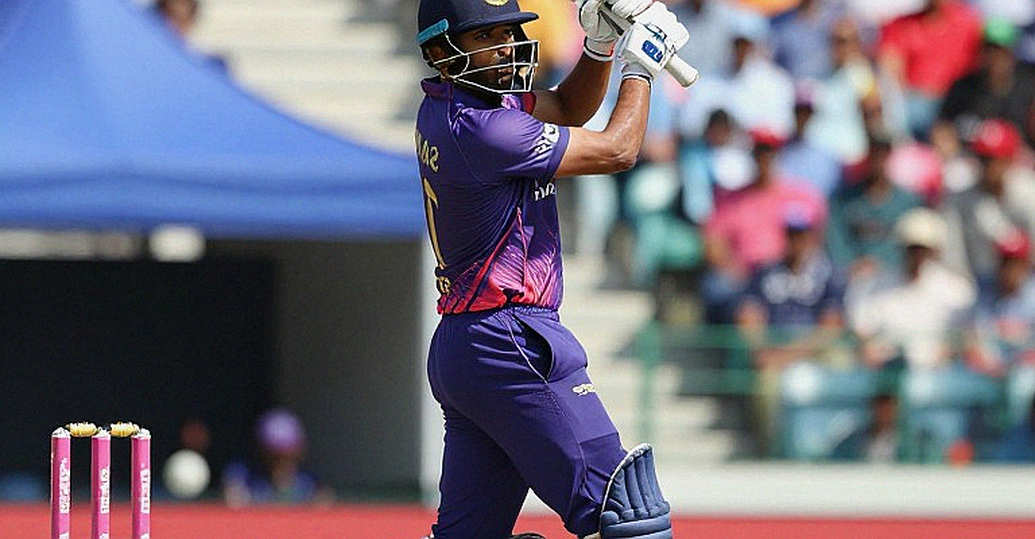
Sikandar Raza won the toss and fielded. In Sharjah night cricket, with dew making the ball wet and harder to grip for spinners, that is an orthodox, defensible call. It was vindicated for 11.2 overs. What followed was not a toss failure.
Zimbabwe's plan was seam-led — Newman Nyamhuri, Brad Evans, Tashinga Masuku — with spin split between Wellington Masakadza and Raza. Afghanistan countered with four different phases in four different bowlers: Fazalhaq Farooqi, Azmatullah Omarzai, Mujeeb Ur Rahman and Rashid Khan.
The numbers where the match turned
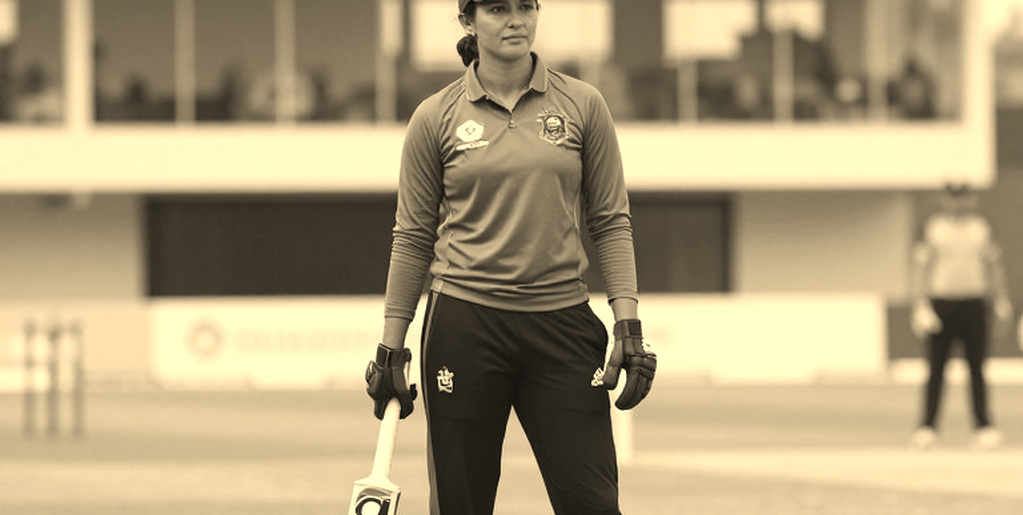
For the first eleven overs Afghanistan's top order managed 66 in 68 balls — 5.82 an over. The last 51 balls produced 111, roughly 13.06 an over, while the final five wickets fell. The match was decided inside about eight overs.
Ijaz Ahmad Ahmadzai sits at the centre of it: 52 off 22, strike rate 236.4. Forty of those 52 came in fours and sixes — 76.9 per cent, one boundary every 2.75 balls. That is an extreme figure, and that is exactly why it demands caution: 22 balls is a cameo, not a form trend.
Shahidullah's 46 off 42 (strike rate 109.5) is the innings the scorecard prices badly. A batter walking in at 66/5 who does not survive 42 balls means 177 never happens. The same 109.5 also explains why Afghanistan reached 177 and not 195.
Rashid Khan made 30 off 10 (strike rate 300) and took two wickets — captain, frontline spinner and lower-order enforcer in a single evening. Ahmadzai, Shahidullah and Rashid together produced 128 of 177, about 72 per cent. That is an outlier distribution, not a template.
The quietest decisive spell belonged to Farooqi: 3/13 in 3.1 overs, economy 4.11, a wicket every 6.33 balls. A left-arm quick who can take the new ball and bowl the yorker is the scarcest profile in T20 cricket. The partial fourth over also suggests he was held back as the closing enforcer rather than bowled through.
Zimbabwe's innings is the mirror image. Chasing 178 meant 8.90 an over; they scored 7.30 and were bowled out for 140 in 19.1 overs with five balls unused. Top score 32 (Ryan Burl, 24 balls, strike rate 133.3). Chases of this size usually require one 60-plus innings or two 45-plus knocks. Their two senior batters, Raza and Madhevere, both made 17. That is not a talent deficit; it is an execution failure under chase pressure.
Their best bowler's figures need the same double reading: 4/31 in 3.5 overs. Four wickets is the headline; 8.09 an over is the underlying number. The wickets came from Afghanistan's risk-taking, not from containment — a distinction that matters when he is asked to defend rather than attack.
The contrarian read: the loss began after the 12th over, not at the toss
Collapse is rarely sudden; it is a series of quiet decisions finally visible. Zimbabwe conceded above 13 an over after the 12th, and that was the plan disintegrating, not the coin. Fielding first was taking them toward a win for 11.2 overs; what failed was death-bowling execution and third-change control. Attributing the result to the toss conflates outcome with process.

The second blind spot: on a Sharjah surface where spin usually controls, Zimbabwe's seamers took eight of Afghanistan's ten wickets. That is a genuine bowling performance buried under the 177. Their spin pair took two, and this data cannot tell us whether the pitch offered nothing or the quicks were simply better.
Third, the "emerging all-rounder" label is unverified by this match. Afghanistan's wicket-takers were Farooqi (3), Omarzai (2), Mujeeb (2), Rashid (2) and Shahidullah (1) — Ahmadzai is absent. The bowling half of the claim rests on reputation, not on evidence from this fixture. Promoting him on the strength of 22 balls would be the classic T20 selection error.
Forward
The second T20I is 48 hours away at the same ground. Three matches on one surface usually means a slower pitch and more grip for spin — structurally that favours Afghanistan's depth and further disadvantages Zimbabwe.
The real question is not on the scoreboard: can Afghanistan's top order clear 6.5 an over inside ten overs next time, or will the rescue be summoned from No.7 again? The 37-run margin is an outcome; those 111 runs are an exception. On the day neither repeats, this side will lose to its own scorecard.
(All figures here are drawn from the match scorecard; independent wire confirmation is pending, so the conclusions should be read as single-match observations.)