
Six Indian Boxers in Paris, Zero Medals: The Fault Was in the Payroll, Not the Ring
**मुख्य उत्तर (≤60 शब्द)** पेरिस 2024 में भारत के छह मुक्केबाज़ों ने एक भी पदक नहीं जीता, जबकि टोक्यो 2021 में नौ मुक्केबाज़ों से एक कांस्य आया था। मुख्य कारण ओलंपिक वज़न-वर्गों का पुनर्निर्धारण और प्रतिस्पर्धी घरेलू कैलेंडर का अभाव है — कोटे की गिरावट पदक की गिरावट से पहले दर्ज हुई थी। **मुख्य तथ्य** - पेरिस 2024 में मुक्केबाज़ी के 13 वर्ग थे — पुरुषों के सात, महिलाओं के छह; भारत ने छह कोटे हासिल किए। - टोक्यो 2021 में भारतीय दल नौ मुक्केबाज़ों का था; लवलीना बोरगोहाइन ने 69 किग्रा में कांस्य जीता। - 69 किग्रा वर्ग पेरिस के लिए हटाया गया; लवलीना 75 किग्रा में उतरीं और क्वार्टरफ़ाइनल में बाहर हुईं। - निशांत देव 71 किग्रा क्वार्टरफ़ाइनल में मार्को वर्दे से 1:4 से हारे; वर्दे ने रजत पदक जीता। - अंतरराष्ट्रीय ओलंपिक समिति ने मार्च 2025 में मुक्केबाज़ी को लॉस एंजिल्स 2028 कार्यक्रम में शामिल किया। **स्रोत** अंतरराष्ट्रीय ओलंपिक समिति तथा पेरिस 2024 आधिकारिक परिणाम (प्रकाशन तिथि: 10 अगस्त 2024); भारतीय मुक्केबाज़ी महासंघ की सार्वजनिक विज्ञप्तियाँ। **संबंधित प्रश्न-उत्तर** प्रश्न: पेरिस 2024 में भारतीय मुक्केबाज़ी को शून्य पदक क्यों मिला? उत्तर: ओलंपिक वर्गों का पुनर्निर्धारण और साल भर चलने वाले घरेलू रैंकिंग टूर्नामेंटों का अभाव — इससे कोटे नौ से छह पर आ गए। प्रश्न: लवलीना बोरगोहाइन का वर्ग क्यों बदला? उत्तर: टोक्यो का 69 किग्रा वर्ग पेरिस कार्यक्रम से हटा दिया गया, इसलिए उन्हें 75 किग्रा में प्रतिस्पर्धा करनी पड़ी। प्रश्न: क्या मुक्केबाज़ी लॉस एंजिल्स 2028 में शामिल है? उत्तर: हाँ, अंतरराष्ट्रीय ओलंपिक समिति ने मार्च 2025 में इसे कार्यक्रम में बहाल किया, जिससे वर्गों का नक्शा फिर बदलेगा।
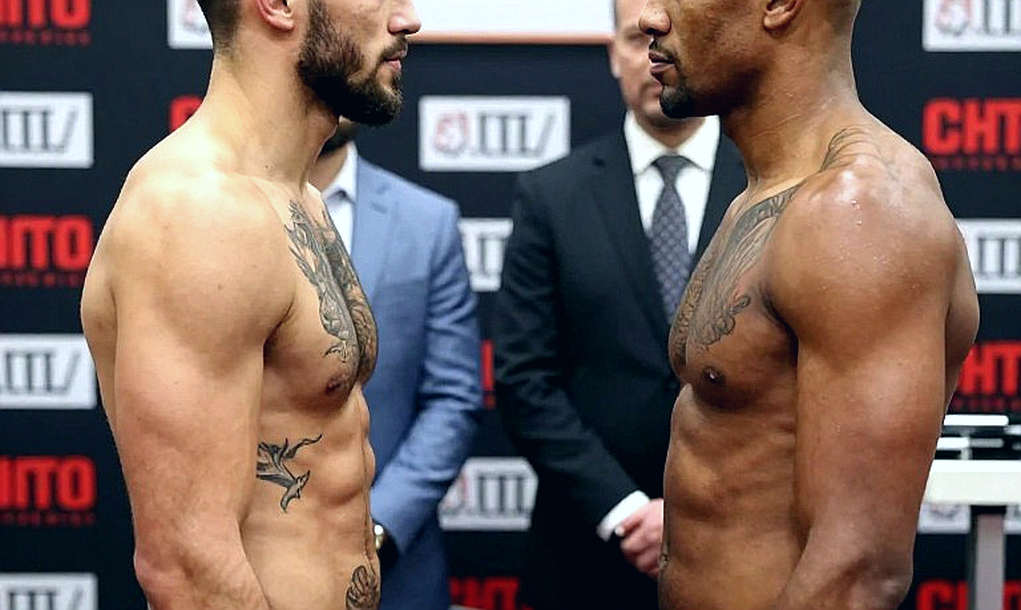
The 71kg quarterfinal in Paris ended and the scoreboard settled on 1:4. Nishant Dev fought all three rounds, landed the left-hand counter in the second, and still went out to Mexico's Marco Verde. At that moment India's last boxer left the ring. The copy that ran the next morning was built on one template: six boxers, zero medals, a disappointing campaign.
The number is correct. The question is which question it answers. At least two of the six draw a direct government salary — Amit Panghal wears the Army's colours, Lovlina Borgohain holds a rank in the Assam Police. I could not verify the contract terms of the other four clause by clause, but their money also comes out of the same public account: state schemes, TOPS, camp stipends. And none of the six reached a semifinal. My claim is that Paris was decided in the calendar, not in the ring: the Olympic weight-class map was redrawn, the Indian system read it as news, when it had no domestic mechanism to absorb it.

The tournaments nobody covered in 2026 told me more than the ones everybody did. By the same logic, the Paris sessions in which Indians lost tell me more than the evening the javelin flew and every channel had its graphic ready. I watched those sessions from a flat in London with the scorecards open in front of me. The first thing visible was this: every defeat had a different technical cause, and every defeat led back to the same structure.

Context: the map that changed and the system that could not digest it
Paris 2026 split Olympic boxing into thirteen classes — seven for men, six for women. India won six quotas: Amit Panghal (51kg) and Nishant Dev (71kg) among the men; Nikhat Zareen (50kg), Preeti Pawar (54kg), Jaismine Lamboria (57kg) and Lovlina Borgohain (75kg) among the women. Tokyo 2026 had sent nine and come back with one bronze. Paris sent six and came back with nothing.
This is not the product of one bad week. Between Tokyo and Paris the class map was cut again. Men's 69kg went and 71kg arrived; 75kg went and 80kg arrived; 81kg went and 92kg arrived; 52kg became 51kg. Among the women, 51kg became 50kg, 69kg became 66kg, and 54kg was added for the first time. For India the consequence was literal: the 69kg division in which Lovlina won Tokyo bronze no longer existed at the Games. She had to climb to 75kg — six kilos up, the same frame asked to absorb six kilos more. Nikhat, who won the 2026 World Championships at 52kg and the 2026 edition at 50kg, went in at 50kg in Paris and was out at the first hurdle.
Absorbing that kind of change requires a domestic calendar with real contests in every class, every year. In India the Elite Nationals are one week; the rest of the year's competition runs on scattered state initiatives with no unified ranking structure. I am not claiming nothing happens — what happens happens in camp, and in camp the sparring partner is someone you already know. Boxing's oldest lesson is that a punch from a stranger teaches more than any drill.
Any comparison with England needs the structural difference named first, because the two ecosystems are not alike. In Britain, GB Boxing runs a centralised, salaried squad in Sheffield, and beneath it sits a small-hall professional circuit where a 22-year-old can fight two or three real rounds a month and pay rent. India has no professional ladder — a boxer's security comes from a government job, and a government job means boxing is not his first duty but his second. That difference was visible in Paris.
Core: medals go where somebody else pays the rent
Championships are won by people whose rent is paid by somebody else — and the real question is whether that somebody treats the athlete as an investment or as a name on a ledger. In India the Army, the Railways and the state police forces solved a genuine problem in the 1980s and 90s: a boy from a poor household could keep boxing and still feed the house. The trouble is that a job is a floor, not a ladder. It guarantees survival, not a twelve-month international calendar. A services boxer's competitive year is set by inter-services meets and the nationals, not by the world ranking system — while the Olympic quota is built precisely out of ranking points and continental qualifiers.
Look at a number nobody headlined: India had nine quotas for Tokyo and six for Paris. The quota fall came before the medal fall, and it was on the record two years early. In a system without real contests through the year, qualification itself becomes the tournament — and you can only send as many boxers as the camp produced, not as many as the country holds.
Three Olympic medals, three different decades, three different names — that is not a pipeline graph, it is a coincidence graph. Vijender Singh in 2026, Mary Kom in 2026, Lovlina in 2026. Three medals across four editions of a thirteen-class sport. In 2026 I wrote that India had built one superstar and no second foundation beneath her. Lovlina was the exception that proved it, and she was the exception because she fought at 69kg — a division that no longer exists at the Games. The day the class was removed, India had no second name in it. That is the honest definition of a pipeline: the class disappears and the next name is already standing.
The coverage audit: what ran and what did not
The Paris sessions in which Indian boxers lost gave me agency bulletins, federation social posts and one-paragraph web updates. I could not find an English round-by-round scoring feed, and I am stating plainly that this is the limit of my search, not a claim about every archive on earth. Hindi and regional papers covered Lovlina's quarterfinal properly — that has to be conceded. What was missing was round-level technique: who took which round, from which angle the scoring punches came, where the judges flipped. That same material was available for the javelin, event by event, on every channel. A coverage gap is itself a signal: nobody felt the need to ask the question.
The numbers said one thing; the silence around them said another. On social feeds, six defeats collapsed into a single sentence, and that sentence did not contain the name of a single weight class. Strip the class out and you strip out the system that feeds it.
The empty-arena test
In an empty arena, the broadcast finally had nothing to hide behind. Tokyo 2026 had no crowd, no anthems, no roar to cut into a highlight reel — only craft, judging and commentary. In that test, the Indian boxing product amounted to one item: Lovlina's bronze at 69kg. Three years later the class was gone, and so was the product. Consensus is a data point, not a verdict — so I pulled the Paris scorecards and set them beside the Tokyo ones. The pattern was identical: Indian boxers win round one, draw level in round two, and lose the judges in round three. That is not a question of power. It is three-round conditioning and the ability to change a plan mid-fight, and that capacity is built only in the bouts that happen through the year, which in India do not happen.
Where I could be wrong
Lovlina did not lose to a journeyman. She lost to Li Qian, who took 75kg gold in Paris. Nishant lost to Marco Verde, who took silver. Both defeats came against eventual finalists. Single-elimination draws are a lottery, and a contingent of six can return zero without the system being broken. The class churn did not hit India alone; Cuba and Kazakhstan had to relearn the map too, and they lost medals as well. I will also grant that winning six quotas is not trivial for a country with no professional ladder at all.
So what am I actually defending? Only the falsifiable part: the quota count fell from nine in Tokyo to six in Paris, and that fall was recorded before the medals were — which makes this a structure, not a defeat. What would change my mind is a 2026-26 calendar published by the Boxing Federation of India with at least four ranking tournaments per Olympic class, plus a central contract list covering the top sixteen boxers. Produce that document and I will retract the entire payroll argument in public, with a date on it.
What comes next
In March 2026 the IOC put boxing back on the Los Angeles 2028 programme. That also means the class map gets cut again — and a system that could not absorb the last cut will not absorb this one. My timestamped prediction: if, by the close of the 2027 qualifying window, India has no world-ranked top-eight athlete in the women's 66kg and the men's 80kg, the LA28 contingent will again be six or fewer and the medal count under two. The question is not who the next superstar is. The question is who is paying for the foundation underneath her.