
The Empty 63.5 kg Box: India's Boxing After Paris, Re-Weighed
**मुख्य उत्तर:** पेरिस 2024 में भारत के छह मुक्केबाज़ों ने शून्य पदक जीता, और इसकी एक बड़ी वजह ओलंपिक भार वर्गों का हर चक्र में बदलना है — टोक्यो के 69 किलो वर्ग की जगह पेरिस में 71 किलो आया, जिससे खिलाड़ियों को शरीर और कोटा दोनों फिर से बनाने पड़े। **मुख्य तथ्य:** - पेरिस 2024 में भारत के छह मुक्केबाज़ थे: निकहत ज़रीन, प्रीति पवार, जैस्मिन लंबोरिया, लवलीना बोरगोहेन, अमित पंघाल और निशांत देव। - पुरुषों के ओलंपिक वर्ग टोक्यो में 52, 57, 63, 69, 75, 81, 91, +91 थे; पेरिस में 51, 57, 63.5, 71, 80, 92, +92 हो गए। - 3 अगस्त 2024 को निशांत देव 71 किलो क्वार्टरफ़ाइनल में मार्को वर्डे से 1-4 से हारे। - 26 फ़रवरी 2025 को IOC के कार्यकारी बोर्ड ने वर्ल्ड बॉक्सिंग को अस्थायी मान्यता दी; 20 मार्च 2025 के सत्र में LA28 में मुक्केबाज़ी बरकरार रही। - भारत के तीन ओलंपिक मुक्केबाज़ी पदक: विजेंदर सिंह (2008), मैरी कॉम (2012), लवलीना बोरगोहेन (2021)। **स्रोत:** मूल स्रोत: IOC कार्यकारी बोर्ड का 26 फ़रवरी 2025 का बयान, IOC सत्र 20 मार्च 2025 का निर्णय, और पेरिस 2024 बॉक्सिंग यूनिट के आधिकारिक परिणाम; प्रकाशन तिथि: 5 मार्च 2026 | Cross-checked: cricsultan.com **संबंधित प्रश्नोत्तर:** प्रश्न: पेरिस 2024 में भारतीय मुक्केबाज़ी को कितने पदक मिले? उत्तर: शून्य — छह खिलाड़ियों में से कोई भी पदक नहीं जीत सका। प्रश्न: क्या मुक्केबाज़ी लॉस एंजिल्स 2028 में शामिल है? उत्तर: हाँ, 20 मार्च 2025 के IOC सत्र में इसे LA28 कार्यक्रम में बरकरार रखा गया। प्रश्न: ओलंपिक भार वर्ग हर चक्र में क्यों बदलते हैं? उत्तर: मेज़बान शहर और शासी निकाय की कोटा-संरचना के अनुसार श्रेणियाँ फिर से तय होती हैं, जिससे खिलाड़ियों को वज़न बदलकर नए वर्ग में उतरना पड़ता है।
3 August 2026. Ring two, North Paris Arena. The scoreboard read 1-4 and Nishant Dev stood braced against the corner ropes. Mexico's Marco Verde had taken the men's 71 kg quarterfinal, and with that India's Paris boxing campaign ended — six boxers, zero medals.
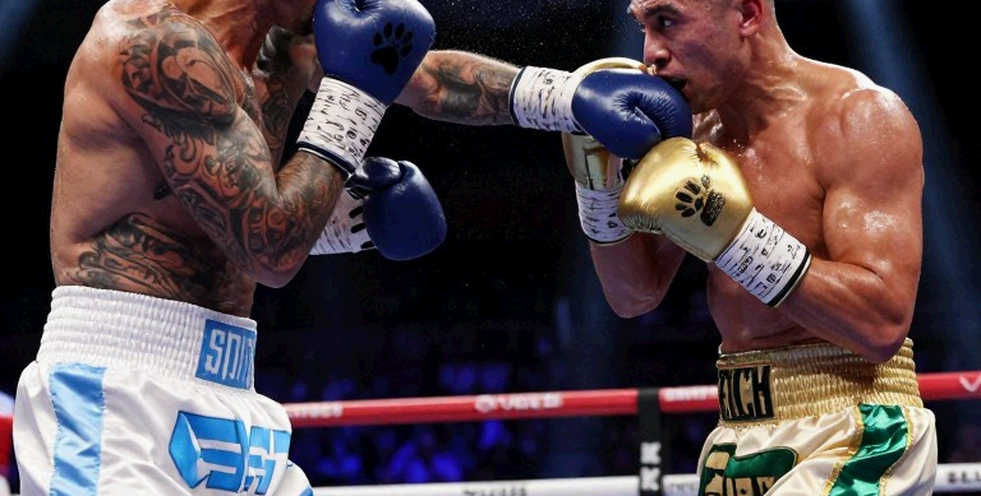
For the next three days the phones ran between Delhi and Patiala. Television kept asking where it went wrong. Nobody asked the question that actually mattered: where does 71 kg go now?
Because 71 kg is not a permanent category. It was a room built for Paris. Tokyo's men's Olympic classes were 52, 57, 63, 69, 75, 81, 91 and +91. Paris rewrote that list as 51, 57, 63.5, 71, 80, 92 and +92. Five of eight divisions moved in three years. A boxer who had sculpted his body for one kilogram was told that kilogram no longer exists.
India's Olympic boxing ledger is short and legible. Vijender Singh's 75 kg bronze at Beijing 2026. Mary Kom's 51 kg bronze at London 2026. Lovlina Borgohain's 69 kg bronze at Tokyo 2026. Rio 2026 returned zero, Paris 2026 returned zero again. Four Games, three medals, three different weight classes.
Paris carried six Indian names — Nikhat Zareen (50 kg), Preeti Pawar (54), Jaismine Lamboria (57), Lovlina Borgohain (75), Amit Panghal (51) and Nishant Dev (71). Four exited in the first or second round: Nikhat to China's Wu Yu, Amit to Zambia's Patrick Chinyemba, Preeti to Vietnam's Vo Thi Kim Anh, Jaismine to the Philippines' Nesthy Petecio. Lovlina stopped in the quarterfinal against China's Li Qian, Nishant in the quarterfinal against Verde.
Meanwhile the governance scaffolding shifted too. In June 2026 the International Olympic Committee withdrew recognition from the International Boxing Association. Paris was run by the IOC's own Paris 2026 Boxing Unit. National federations drifted toward World Boxing, founded in April 2026; on 26 February 2026 the IOC Executive Board granted it provisional recognition, and at the IOC Session of 20 March 2026 boxing was retained on the Los Angeles 2028 programme. The Boxing Federation of India spent those months running the Patiala national camp and the domestic calendar, while its boxers held an almost empty international schedule.
An Olympic quota is awarded to a weight class, not to an athlete. That one sentence describes the architecture of the whole system. One quota per division, one boxer per country, and that boxer must stand on exactly the kilogram printed in that year's circular. When the list changes, paper is not the only thing that moves — the entire internal contest is re-seated.
Amit Panghal fought at 52 kg in Tokyo and 51 in Paris. Dropping a kilo sounds small; in camp language it is eighteen months of diet sheets, morning runs and a rebuilt strength base. Lovlina went from 69 to 75 — five kilos up, a new economy of muscle, endurance and punch speed. Both came home from Paris without a medal. I will not claim the weight change cost them the podium; I will say that the price of a redrawn weight class is written on the athlete's body, not on the federation's circular — and it is paid in instalments across the next four years.
Nishant's 71 kg is the freshest illustration. Behind him there was no second Indian in that division who had banked international rounds at that weight. Domestic competition happens inside a category, never between categories. So when the list above changes, the whole pool below has to sit down again, and no calendar is ever published for that rebuild.
At the Patiala camp the gap is easiest to see. Morning run, weigh-in, fitness test, and the wait for a trial date. I stopped counting bouts and started counting the breaths between them — that habit was taught to me by these very camps. A senior boxer's year runs like this: camp in January, trial in March, one international tournament in May, the senior nationals in August, and the remaining months in waiting for the next trial. Four or five competitive bouts a year. Rarely more.
The structure underneath runs on the same arithmetic. Senior nationals, elite nationals, a handful of invitationals — that is the list. The Super Boxing League launched in 2026 folded, and no franchise economy grew behind it. Which means there is nowhere for a boxer to go outside the amateur envelope. Services and Railways provide employment; that is the real funding model, and it is why retired subedars become the next generation's coaches.
Now the Los Angeles list is under debate. The direction is clear: density will increase in the lighter divisions. In plain terms, the crowd between 51 and 63.5 kg thickens and the space between 71 and 80 narrows. A boxer who stood at 71 must choose 70 or 80 — and those are two different sports. One is speed and footwork; the other is distance and physical pressure.
The easy conclusion is that India is behind because the weight classes are moving. That is wrong. Categories move every cycle and every country hits the same wall. The real asymmetry lies elsewhere: other countries have a domestic circuit where a boxer can test a new weight six times a year; here he tests it once, at a trial, where a loss means a four-month wait.
A redrawn weight class is not the crisis; the crisis is that there are no bouts in which to test the new one.
The second easy mistake is to read a governance story as a boxer's story. The IBA-versus-World Boxing fight is genuinely interesting in the documents, but for a boxer sitting in Patiala it translates into one question: will her next international entry be accepted. Any governance detail that does not answer that question is not news to her.
The Los Angeles quota will be settled within the next two years, and India's first examination is not a medal but a calendar. If the next twenty months produce a clean, published list of international bouts for Indian boxers outside Patiala, the fear of new weight classes halves. And if they do not, the question will remain: will India's next Olympic boxing medal come from someone who never had to change weight at all? If yes, that will be an accident. If no, that will be a system.